
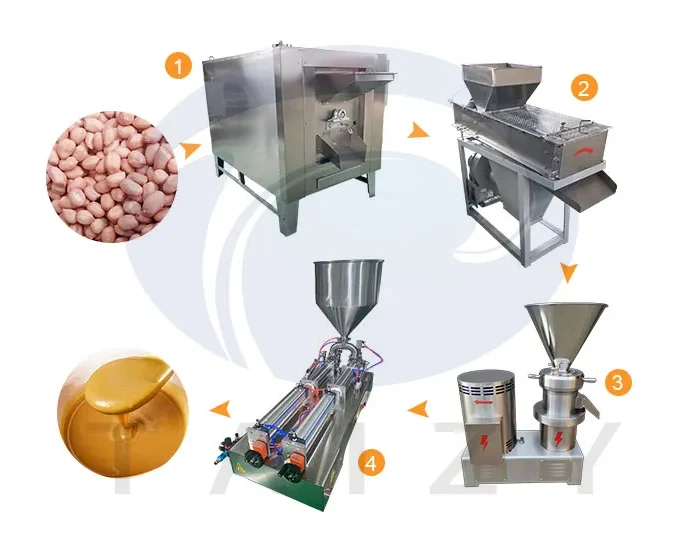
A small scale peanut butter production line is an integrated but semi-automated processing system designed for an output capacity of 50–100 kg/saat. It bridges the gap between manual kitchen equipment and fully automatic industrial production lines. This type of production line is ideal for startups, small food factories, agricultural cooperatives, and regional food brands that need commercial production capabilities while avoiding the high investment costs of a fully automated factory.
A complete line generally includes:
- Raw peanut intake and cleaning
- Roasting
- Cooling and peeling
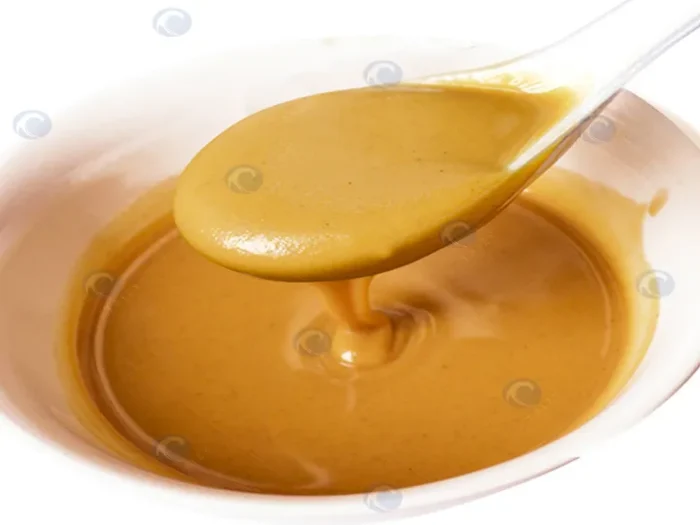
- Grinding into paste
- Mixing and seasoning
- Degassing
- Filling and packaging
Compared with large industrial lines, this compact peanut butter processing line keeps all essential steps motorized while allowing operators to control roasting, texture, and seasoning. The result is consistent flavor, smooth or crunchy texture options, and flexible batch sizes. Taizy has shipped peanut butter processing solutions to over 40 countries, including Italy, Canada, South Africa, and the Democratic Republic of the Congo, with strong customer feedback on reliability and ease of use.
Note before reading: If you are interested in the machine featured in this article, please click the three contact options on the right-hand pop-up window to get in touch with us. We will provide you with a quotation within 24 hours.
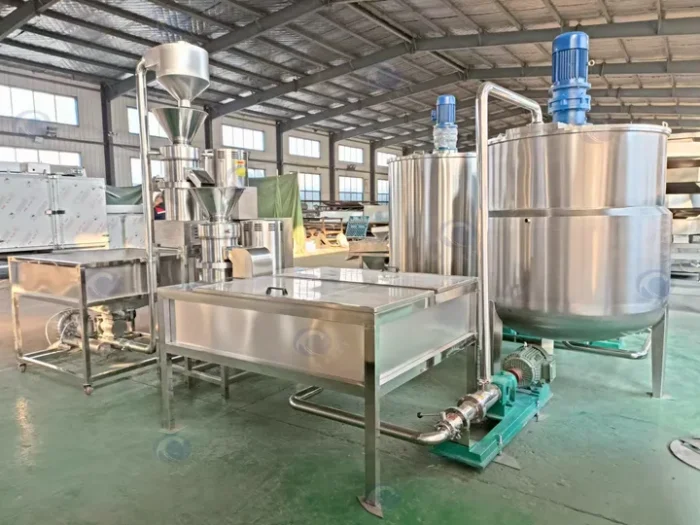
Small Scale Peanut Butter Production Line Technical Specifications
| Ekipman | Modeli | Kapasite | Güç | Key Parameter | Malzeme |
|---|---|---|---|---|---|
| Peanut Roaster | TZR-100 | 100 kg/h | 1.1 kW motor + 22.5 kW heating | 0–300°C thermostat control | Stainless Steel |
| Dry Peanut Peeling Machine | TZ-1 / TZ-2 | 100–200 kg/h | 0.75 kW | ≥98% peeling rate | Stainless Steel |
| Peanut Butter Grinder | TZ-110 | 80–100 kg/h | 7.5 kW | 2–100 μm adjustable fineness | 304 Paslanmaz Çelik |
| Mixing & Degassing Tank | TZ-MT100 | 100 L/batch | 1.5 kW | Jacketed tank + vacuum option | 304 Paslanmaz Çelik |
| Semi-Automatic Filling Machine | TZ-F2 | 400–500 bottles/h | 0.75 kW | 100–1000 ml filling range | Stainless Steel |
| Hava Kompresörü | TZ-AC3 | 0.8 MPa | 3 kW | 380V, 3-phase | Industrial Grade |
| Capping Machine | TZ-CAP | 20 pcs/min | 0.37 kW | Bottle height: 160–300 mm | Stainless Steel |
| Labeling Machine | TZ-LAB | 20–40 bottles/min | 100 W | Label width: 26–150 mm | Stainless Steel |
Who Benefits Most from a Compact Peanut Butter Processing Line?
A small scale peanut butter production line is not a scaled-down toy version of industrial equipment. It is a serious production tool for specific business models:
Startups Testing the Market
Entrepreneurs who want to validate recipes and packaging before scaling find the mini peanut butter production line ideal. It allows frequent batch changes without wasting thousands of dollars of ingredients.
Farming Cooperatives
Groups of peanut growers can add value locally instead of selling raw nuts at commodity prices. Processing on-site reduces transport losses and increases per-kilogram revenue.
Small Food Processors
Bakeries, health-food brands, and specialty sauce companies can produce peanut butter as a side product or private-label SKU with minimal disruption to existing operations.
Regional Distributors
Trading companies in emerging markets often install a compact peanut butter processing line near their warehouse to serve local retailers with fresher product and shorter lead times.
Community Kitchens and Training Centers
Food entrepreneurship programs use small-scale lines to teach participants commercial food safety, recipe standardization, and packaging compliance.

Core Machines in a Small Scale Peanut Butter Production Line
Every line is customized, but the equipment list below represents the standard configuration for a 50–100 kg/h small batch peanut butter production line.
Peanut Roaster
Roasting is the single most flavor-critical step. A drum roaster heats peanuts evenly while rotating them at a controlled speed. Temperature and residence time determine color, aroma, and oil release.
- Electric heat offers precise control and clean indoor operation.
- Gas heat lowers energy bills where gas is cheap.
- Batch roasters suit frequent recipe changes.
- Continuous roasters suit steady daily volume.
For a small scale peanut butter production line, electric or gas drum roasters in the 80–150 kg/h range are most common.
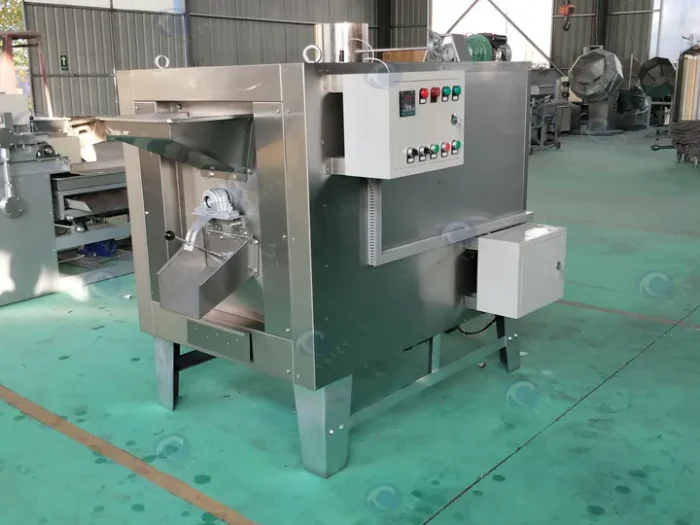
Technical Parameters of Peanut Roaster
| Modeli | TZ-MHK-1 | TZ-MHK-2 | TZ-MHK-3 | TZ-MHK-4 | TZ-MHK-5 |
|---|---|---|---|---|---|
| Transmission Power | 1.1 kW | 2.2 kW | 3.3 kW | 4.4 kW | 5.5 kW |
| Heating Power | 22 kW | 35 kW | 45 kW | 60 kW | 75 kW |
| Heating Gas Consumption | 2–3 kg | 3–6 kg | 6–9 kg | 9–12 kg | 12–15 kg |
| Roasting Capacity | 80–120 kg/h | 180–250 kg/h | 280–350 kg/h | 380–450 kg/h | 500–650 kg/h |
| Boyut | 3000×1200×1700 mm | 3000×2200×1700 mm | 3000×3300×1700 mm | 3000×4400×1700 mm | 3000×5500×1700 mm |
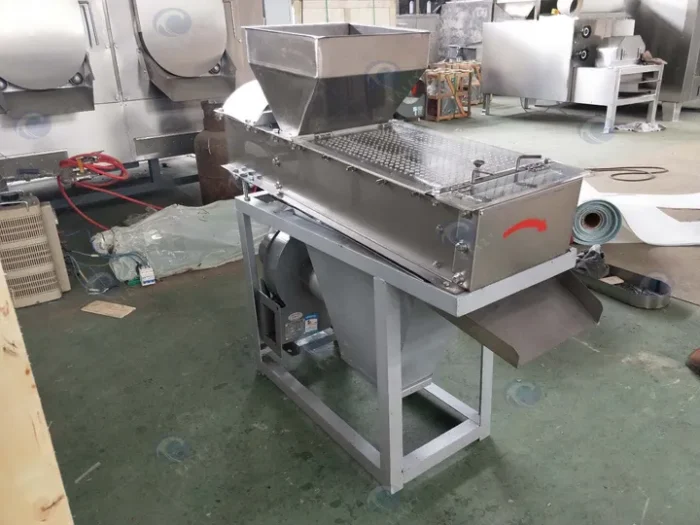
Peanut Peeling Machine
The dry peeling process is usually used for peanut butter production. The peanut peeling machine mainly uses the friction force of emery rollers to remove the red skin of peanuts.
The peeling rate can reach more than 98%, while the broken kernel rate remains low.
Technical Parameters of Peanut Peeling Machine
| Modeli | Çıkış | Motor Power | Fan Gücü | Gerilim | Sıklık | Peeling Performance | Half Kernel Rate | Boyut(mm) |
|---|---|---|---|---|---|---|---|---|
| TZ-1200 | 300 kg/h | 0.55 kW | 0.37 kW | 380V/220V | 50Hz | >98% | ≤5% | 1100×400×1100 |
| TZ-2400 | 500 kg/saat | 0.55 kW×2 | 0.37 kW | 380V/220V | 50Hz | >98% | ≤5% | 1100×700×1100 |
| TZ-3600 | 800 kg/h | 0.55 kW×3 | 0.37 kW | 380V/220V | 50Hz | >98% | ≤5% | 1100×1000×1100 |
| TZ-4800 | 1000 kg/h | 0.55 kW×4 | 0.37 kW | 380V/220V | 50Hz | >98% | ≤5% | 1100×1400×1100 |
Peanut Butter Grinding Machine
Under normal conditions, the fineness of peanut butter produced by the grinding machine is 100–150 mesh. The fineness can also be adjusted according to actual processing requirements.
According to many processing tests, grinding peanut butter at 80–85℃ provides the best taste and texture.
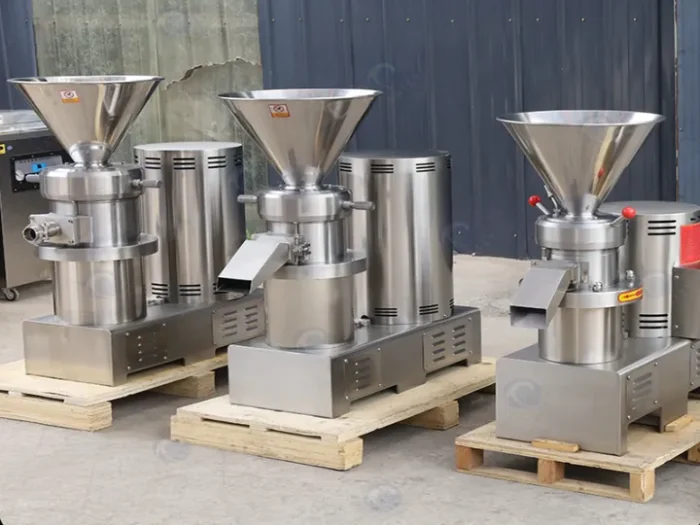
Technical Parameters of Peanut Butter Grinding Machine
| Modeli | JM-50 | JM-85 | JM-130 |
|---|---|---|---|
| Material Processing Fineness (μm) | 20–70 | 20–70 | 20–70 |
| Main Motor Power (kW) | 1.5 | 5.5 | 7.5 |
| Output (t/h) | 0.2–0.8 | 0.2–2 | 0.2–3 |
| No-load Revolutions (r/min) | 3000±100 | 3000±100 | 3000±100 |
| Pipeline Discharge Size (cm) | 79×30×70 | 105×40×100 | 115×45×108 |
| Square Outlet Size (cm) | 60×30×62 | 85×40×90 | 96×45×95 |
| Hopper Height (cm) | 14 | 25 | 30 |
| Ağırlık (kg) | 60 | 180 | 240 |
| Cooling System | Equipped | Equipped | Equipped |
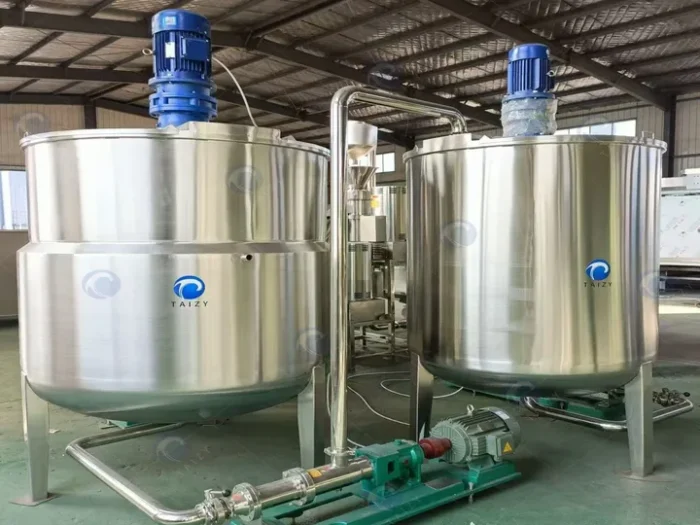
Peanut Butter Storage and Vacuum Tanks
Peanut Butter Agitation Tank
The agitation tank prevents peanut butter from solidifying and is also used for seasoning. After grinding, peanut butter is transferred to the tank, where ingredients such as salt, sugar, or stabilizers can be added to improve flavor, stability, and shelf life.
Vacuum Degassing Tank
The vacuum degassing tank removes air bubbles formed during mixing. This helps improve the texture, appearance, and storage stability of peanut butter.
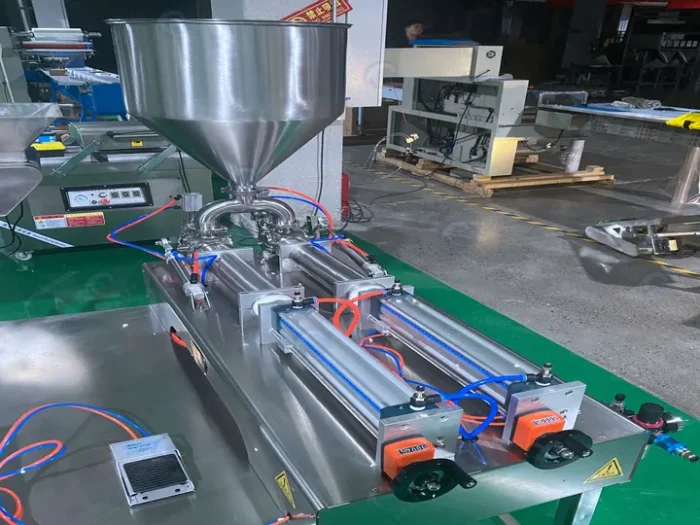
Peanut Butter Filling Machine
After peanut butter preparation is completed, it is ready for packaging.
The peanut butter filling machine uses a pneumatic system to achieve automatic filling. The filling volume can be adjusted according to different package sizes, and the filling accuracy is generally within ±1–2%.
The filling machine is suitable for packaging peanut butter into jars, bottles, and other containers, making it an important part of the complete peanut butter production line.
How to Choose the Right Capacity?
Not every small scale peanut butter production line needs to run at maximum speed. Capacity should match your sales plan, not your ambition.
| Daily Sales Target | Recommended Line Capacity | Typical Shift Output |
|---|---|---|
| Under 100 kg/day | 50 kg/h | 400–500 kg in one shift |
| 100–300 kg/day | 80–100 kg/h | 600–800 kg in one shift |
Undersized equipment creates bottlenecks. Oversized equipment wastes electricity, occupies space, and increases cleaning workload. The most successful startups choose a mini peanut butter production line they can consistently feed with orders.
Production Workflow from Raw Peanuts to Packaged Butter
A well-run small scale peanut butter production line follows a clear sequence. Skipping or rushing any stage shows up in the final product.
Step 1: Sorting and Inspection
Remove stones, moldy kernels, damaged nuts, and foreign matter. This step is often manual at small scale but can be supported by a vibrating sieve.
Step 2: Roasting
Set the roaster to 160–180°C. Roast until the internal temperature reaches approximately 150°C and the kernels are uniformly golden. Roasting too little produces a grassy flavor; roasting too much produces bitterness.
Step 3: Cooling
Spread roasted peanuts and cool them with ambient air or a cooling conveyor. Peanuts should be warm to the touch but not hot before entering the peeling machine.
Step 4: Peeling
Run cooled peanuts through the dry peeling machine. Collect skins for animal feed or disposal. Inspect peeled kernels for any remaining skin fragments.
Step 5: Grinding
Feed peeled peanuts into the colloid mill. For smooth peanut butter, grind twice: first coarse, then fine. For crunchy peanut butter, keep the first grind and add chopped roasted kernels during mixing.
Step 6: Mixing and Flavoring
Transfer peanut paste to the mixing tank. Add ingredients according to your formula.
Common additions include:
- Salt: 1–2%
- Sugar: 2–5%
- Honey: 3–6%
- Vegetable oil: 2–5% (to adjust viscosity)
- Stabilizer: 0.5–2% (to reduce oil separation)
Step 7: Degassing
Place mixed peanut butter under vacuum to remove trapped air. This step is especially important for natural peanut butter without stabilizers.
Step 8: Filling and Sealing
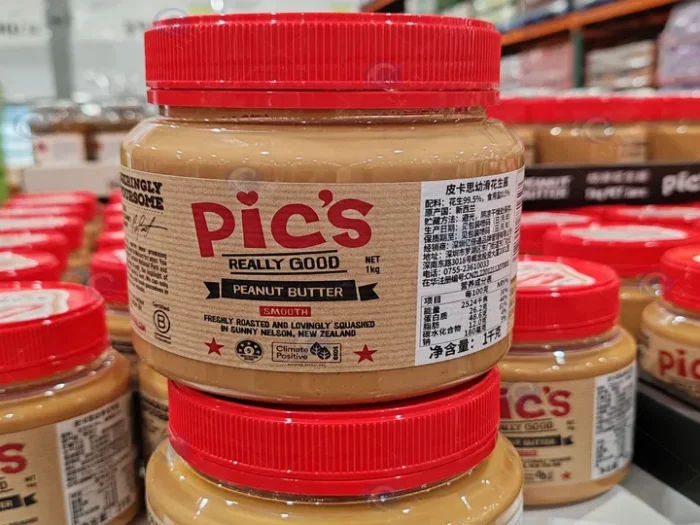
Fill jars while the butter is still warm and fluid. Seal immediately, then label with production date, batch number, ingredients, and allergen warnings.
Investment and Operating Costs
A complete small scale peanut butter production line with 80–100 kg/h capacity depending on configuration, voltage requirements, and level of automation.
Common Mistakes First-Time Operators Make
Buying Based on Price Alone
The cheapest colloid mill or roaster often becomes the most expensive machine after repair costs, inconsistent output, and lost batches. Stainless-steel food-contact parts, reliable motors, and accessible spare parts matter more than a low upfront price.
Ignoring Power Requirements
A compact peanut butter processing line usually needs three-phase 380V power. Domestic single-phase supply will limit your equipment choices. Verify electrical infrastructure before ordering.
Skipping Vacuum Degassing
Many beginners omit the degassing tank to save money. The result is foamy peanut butter that oxidizes faster and looks unappealing in jars. This machine often pays for itself through longer shelf life and better customer perception.
Poor Raw Material Control
Aflatoxin contamination is the biggest food safety risk in peanut butter production. Always test incoming peanuts and reject batches above regulatory limits. Aflatoxin is not removed by roasting.
Inadequate Cleaning Protocols
Peanut butter residue hardens quickly and harbors bacteria. Daily cleaning of the grinder, tank, and filler is essential. Build cleaning time into every shift plan.
Sıkça Sorulan Sorular
What is the minimum number of workers needed?
A small scale peanut butter production line can run with two to three operators: one managing roasting and peeling, one handling grinding and mixing, and one filling and packaging. With automatic conveyors and a fully automatic filler, this can be reduced to two workers.
Can the same equipment make almond butter or cashew butter?
Yes. A colloid mill can process almonds, cashews, hazelnuts, macadamias, and blended nut butters. However, each nut has different oil content and hardness, so grinding settings and processing times must be adjusted. Some producers dedicate one line to peanut butter and use a separate grinder for other nuts to avoid cross-contamination and allergen issues.
Is a peanut butter business profitable in rural areas?
Yes, especially when local peanuts are available at low cost and competition from national brands is weak. Rural and semi-urban markets often prefer locally produced peanut butter because it is fresher, more affordable, and supports the local economy. A mini peanut butter production line is particularly effective in these markets because of its low capital requirement and modest energy needs.
How long does installation and training take?
Most small batch peanut butter production line installations take 2–5 days. Operator training typically requires 2–3 days, covering machine operation, cleaning, basic troubleshooting, and safety procedures. Taizy also provides video support and remote technical guidance after installation.
What certifications are required to sell peanut butter?
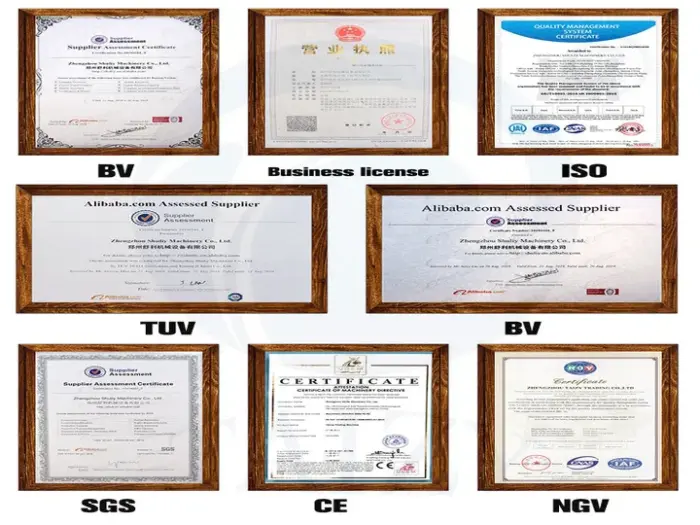
Requirements vary by country, but common requirements include food business registration, HACCP or ISO 22000 certification, product label approval, and periodic microbial and aflatoxin testing. Because peanuts are a major allergen, clear allergen labeling is mandatory in most markets.
Should I buy shelled peanuts or process them myself?
If you have reliable access to high-quality shelled peanuts and your volumes are under 200 kg/day, buying shelled peanuts usually makes sense. If you source peanuts directly from farmers at harvest time and want full control over quality, adding a sheller can reduce raw material costs by 15–30%.
How do I prevent oil separation in my peanut butter?
Oil separation is natural in 100% peanut butter because peanut oil rises to the top. You can reduce it by adding a small amount of stabilizer, such as hydrogenated vegetable oil or palm oil, at 1–3%. For natural products, instruct customers to stir before use and store jars upside down. Vacuum degassing and proper cooling after filling also help stabilize the product.
What is the ideal jar size for a startup?
The most common startup sizes are 250 g, 350 g, and 500 g jars. Smaller jars reduce the customer’s trial cost and allow you to test multiple flavors. Once you have loyal buyers, 1 kg jars work well for families, bakeries, and restaurants.
How often should grinding plates be replaced?
Grinding plates in a colloid mill typically last 500–1,500 operating hours depending on the hardness of the peanuts and the desired fineness. Signs of wear include reduced output, uneven particle size,
Can I start production in a rented kitchen?
Many food incubators and shared commercial kitchens allow small-scale nut butter production, but you must confirm allergen policies. Peanuts are a major allergen, and some shared facilities prohibit or restrict their use. Always check local regulations and facility rules before investing in equipment.
Why Choose Taizy for Your Small Scale Peanut Butter Production Line?
Taizy Machinery has supplied peanut butter processing solutions to over 40 countries, including Italy, Canada, South Africa, and the Democratic Republic of the Congo. Our small-scale peanut butter production lines are engineered for:
- Reliability: Industrial-grade components designed for continuous operation
- Flexibility: Easy adjustment for different nut types and formulations
- Support: Complete installation, training, and after-sales service
- Quality: All food-contact parts made from 304 stainless steel
- Scalability: Start small and upgrade capacity as your business grows
We provide turnkey solutions tailored to your production goals, budget, and local market requirements. Our engineers work with you to design the optimal configuration for your specific needs.
Ready to start your peanut butter business? Contact Taizy Machinery today for a free consultation and custom quote. We’ll help you choose the right equipment, design your production workflow, and launch your peanut butter brand with confidence.
Related Equipment
Chili Ezmesi Öğütme Makinesi
This combined colloid mill is upgraded on the basis of peanut butter grinding equipment, covering a full series of standard models with hourly processing capacity ranging from 10kg to 5000kg and supporting a maximum daily output of 60 tons within 12 hours. It adopts food-grade 304/201 stainless steel for all material contact parts, with a wear-resistant 9Cr18 stainless steel grinding rotor as the core grinding component. Equipped with an independent circulating cooling system and an adjustable stator-rotor clearance structure, the finished material fineness reaches 100–200 mesh with particle sizes of 2–60 microns and a homogenization rate over 95%. Beyond chili and tomato paste, it can process peanuts, sesame, cocoa beans and oily raw materials, and extend to emulsification and grinding tasks for food, daily chemical, pharmaceutical and chemical industries. With continuous feeding & discharging structure, optional recirculation pipeline and standard/explosion-proof motor configuration, it delivers contamination-free, uniform slurry products for seasoning factories, nut processing workshops, cosmetic manufacturers and pharmaceutical plants.
Core Advantages
- Ultra-Wide Material Compatibility: Fits oily materials, fruits, spices, chemical raw materials and medicinal raw slurries; multi-stage coarse/fine/ultrafine grinding zones meet diverse fineness production standards.
- Large-Scale Continuous Production: Stable uninterrupted feeding and discharging workflow, only 1 operator required to cut labor cost drastically, available for small workshops and large industrial batch production.
- Three-Stage Layered Grinding Structure: Coarse, fine and ultrafine grinding chambers generate strong shearing, friction and impact force, avoiding uneven particle size and ensuring smooth, delicate finished slurry.
- Precise Fineness Adjustable Design: Dial-type adjusting ring controls stator-rotor gap freely, stably locking grinding clearance with limit screws to realize consistent product texture batch after batch.
- Complete Built-In Cooling System: Independent water cooling circulation prevents material overheating, retains original flavor and active ingredients without deterioration during long-time grinding.
- Hygienic & Wear-Resistant Construction: Food-contact stainless steel structure is anti-corrosion and easy to disassemble & clean; hard alloy grinding head features long service life and low replacement frequency.
- Flexible Customization & Full After-Sales Service: 12-month full machine warranty with online remote and on-site installation guidance; voltage, motor type, stator-rotor material, and inlet/outlet mode all support personalized customization.