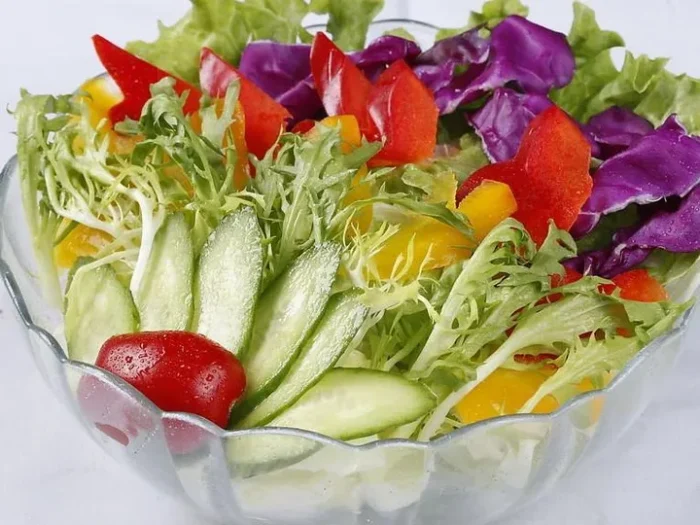
สลัดตัดแต่งสดเป็นหนึ่งในหมวดที่เติบโตเร็วที่สุดในตลาดอาหารพร้อมรับประทาน แต่ความแตกต่างระหว่างธุรกิจสลัดที่ทำกำไรกับที่ประสบปัญหามักอยู่ที่สิ่งเดียว คือการทำความสะอาดและการอบแห้ง ผักที่ล้างไม่ดีมีความเสี่ยงด้านความปลอดภัยอาหาร ความชื้นส่วนเกินทำให้อายุสั้นลง การแปรรูปด้วยมือตามความต้องการไม่ทัน
สายล้างและอบแห้งผักผลไม้ที่ดีที่สุดสำหรับการผลิตสลัดเฟรชคัตคือระบบอัตโนมัติเต็มรูปแบบที่ผสานการล้างด้วยฟองอากาศ การกำจัดเศษด้วยแปรง และการอบแห้งด้วยลมความเร็วสูงในขั้นตอนต่อเนื่องเดียว ควรรองรับผักใบที่บอบบางโดยไม่ช้ำ ขจัดดินและเชื้อปนเปื้อนอย่างมีประสิทธิภาพ และอบผลิตผลให้แห้งพอสำหรับบรรจุ กำลังการผลิตทั่วไป 500–2,000 กก./ชม. ขึ้นอยู่กับเป้าหมายผลผลิตรายวันของท่าน
ในคู่มือนี้ ท่านจะได้เรียนรู้ว่าอะไรทำให้สายล้างผักเหมาะกับการผลิตสลัด คุณสมบัติใดสำคัญที่สุด และวิธีเลือกโครงสร้างให้ตรงกับการดำเนินงานของท่าน
เหตุใดสลัดเฟรชคัตจึงต้องใช้สายล้างและอบแห้งเฉพาะทาง?
การผลิตสลัดไม่เหมือนการล้างมันฝรั่งหรือแครอทเพื่อแปรรูป ผักใบเปราะบาง มีพื้นที่ผิวมาก และมักบริโภคดิบ ซึ่งเปลี่ยนข้อกำหนดของอุปกรณ์ล้างและอบแห้งผลิตผลทุกประการ
ความปลอดภัยทางอาหารเป็นสิ่งที่ไม่สามารถประนีประนอมได้
ผักกาดหอม ผักโขม และร็อกเก็ตมักรับประทานโดยไม่ผ่านความร้อน ดิน สารตกค้าง หรือแบคทีเรียที่เหลือจะถึงผู้บริโภคโดยตรง เครื่องล้างผักผลไม้อัตโนมัติเชิงพาณิชย์ต้องขจัดเศษและลดปริมาณเชื้อก่อนบรรจุ
อายุการเก็บรักษาขึ้นอยู่กับการควบคุมความชื้น
ใบเปียกเหี่ยวเร็วและเกิดหยดน้ำในบรรจุภัณฑ์ การอบแห้งที่เหมาะสมยืดอายุจากไม่กี่วันเป็น 7–10 วัน ซึ่งสำคัญต่อการกระจายสินค้าค้าปลีก
รูปลักษณ์ที่น่ารับประทานมีผลต่อการตัดสินใจซื้อ
ผู้บริโภคตัดสินสลัดจากสีและความสด ระบบล้างที่ทำให้ใบช้ำหรือดูเหี่ยวจะกระทบยอดขาย แม้สินค้าจะปลอดภัยรับประทาน
ต้นทุนแรงงานกัดกร่อนกำไร
การล้างและสลัดน้ำด้วยมือต้องใช้ทีมใหญ่แต่ผลยังไม่คงที่ ระบบอัตโนมัติช่วยลดแรงงาน เพิ่มผลผลิต และมาตรฐานคุณภาพ
คุณสมบัติหลักของสายล้างและอบแห้งสลัดที่ดีที่สุด
ไม่ใช่ทุกสายล้างและอบแห้งผักผลไม้เหมาะกับสลัด โปรดมองหาคุณสมบัติเฉพาะเหล่านี้
การล้างด้วยฟองอากาศอย่างอ่อนโยนสำหรับใบผักที่บอบบาง
ถังล้างฟองอากาศใช้ฟองอากาศเข้มข้นและการหมุนเวียนน้ำเพื่อคลายดินและสิ่งตกค้างโดยไม่ขัดถูเชิงกล วิธีนี้เหมาะกับผักใบเพราะสะอาดทั่วถึงพร้อมคงเนื้อสัมผัสและรูปลักษณ์
การกำจัดเศษสิ่งสกปรกด้วยแปรงสำหรับอนุภาคละเอียด
หลังล้างด้วยฟองอากาศ ส่วนลูกกลิ้งแปรงคู่ขนานจะขจัดเศษละเอียด เส้นขน และคราบฝังแน่น ลูกกลิ้งแปรงเนื้อนุ่มจำเป็นสำหรับผักสลัดเพื่อไม่ให้ใบฉีก
การอบแห้งด้วยลมความเร็วสูง
พัดลมหลายชุดเป่าลมปกติหรือลมอุ่นเล็กน้อยทั่วผลิตผลขณะเคลื่อนบนสายพานตาข่าย ระบบที่ดีจะกระจายลมทั่วถึงเพื่อให้ใบแห้งโดยไม่จับก้อนหรือทิ้งคราบน้ำ
การควบคุมความเร็วด้วยอินเวอร์เตอร์
ผลิตผลต่างกันต้องการเวลาอยู่ในเครื่องต่างกัน ผักโขมต้องการการจัดการอ่อนโยนกว่ากะหล่ำปลี อินเวอร์เตอร์ช่วยให้ผู้ปฏิบัติงานปรับความเร็วสายพานตามผลิตผลที่แปรรูป
โครงสร้างสแตนเลส SUS304 ทั้งระบบ
มาตรฐานความปลอดภัยอาหารกำหนดให้พื้นผิวต้านการกัดกร่อนและฆ่าเชื้อง่าย ชิ้นส่วนสัมผัสอาหารทั้งหมดควรเป็นสแตนเลส 304 เชื่อมเรียบเพื่อป้องกันการเติบโตของแบคทีเรียและคราบสะสม
รูปแบบโมดูลาร์ขยายได้
ที่ดี สายการล้างผัก ช่วยให้ท่านเริ่มต้นด้วยชุดล้างและอบแห้งกะทัดรัดและเพิ่มโมดูลในภายหลัง เช่น ลิฟต์ป้อน สายพานคัดแยก หรือระบบคัดเกรด
โครงสร้างที่แนะนำสำหรับการผลิตสลัดเฟรชคัต
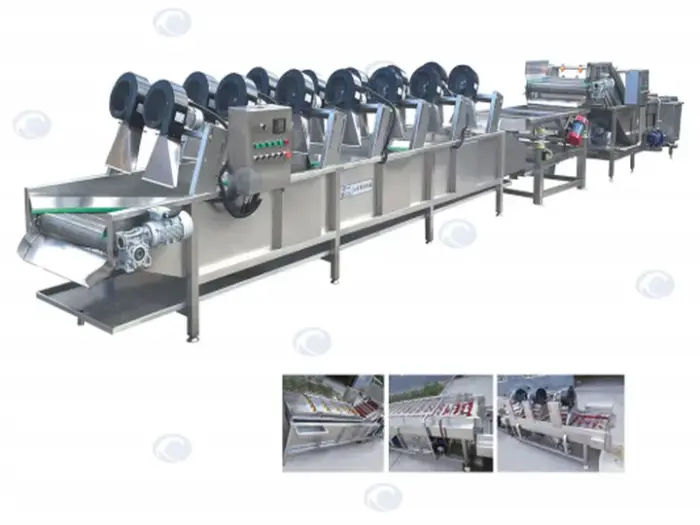
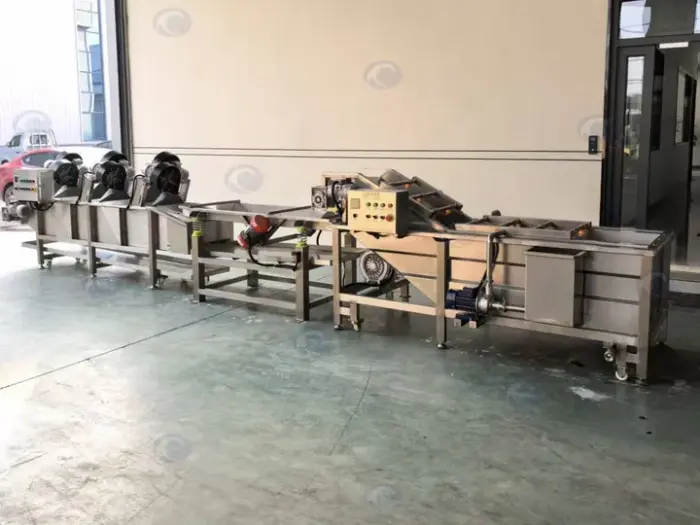
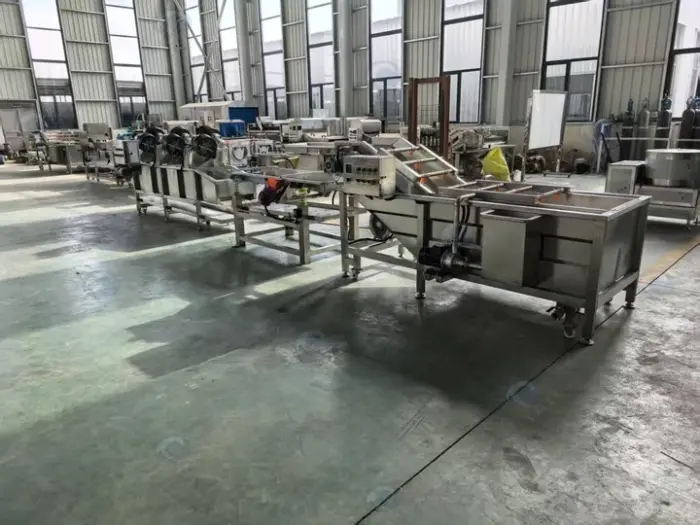
สำหรับงานที่เน้นสลัด เราแนะนำแบบสี่ขั้นตอน สายการล้างและอบแห้งผักผลไม้:
| ขั้นตอน | เครื่องจักร | ฟังก์ชัน | เหตุผลที่สำคัญต่อสลัด |
|---|---|---|---|
| 1 | ลิฟต์ป้อนอาหาร | ควบคุมการป้อนวัตถุดิบ | ป้องกันการช้ำและ การป้อนเกินกำลัง |
| 2 | เครื่องล้างด้วยฟองอากาศ | ขจัดดิน ทราย และสิ่งปนเปื้อนบนผิว | อ่อนโยนต่อผักใบ |
| 3 | เครื่องกำจัดเศษสิ่งสกปรกด้วยแปรงคู่ขนาน | ขจัดเศษละเอียดและเส้นขน | ยกระดับความสะอาด ที่มองเห็นได้ |
| 4 | เครื่องอบแห้งด้วยลม | ขจัดความชื้นบนผิว | ยืดอายุการเก็บรักษาและ ช่วยให้บรรจุภัณฑ์ดีขึ้น |
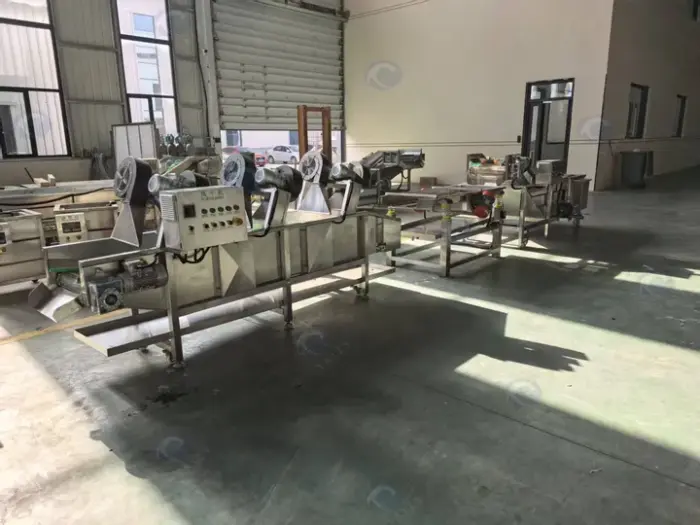
สำหรับโรงงานขนาดเล็กหรือปริมาณไม่มาก โครงสร้างกะทัดรัดที่มีเพียงเครื่องล้างฟองอากาศกับเครื่องอบแห้งด้วยลมเป็นจุดเริ่มต้นที่เหมาะสม ท่านสามารถเพิ่มลิฟต์ป้อนและเครื่องกำจัดเศษภายหลังเมื่อกำลังการผลิตเติบโต
วิธีกำหนดขนาดสายการผลิตให้เหมาะกับธุรกิจสลัดของท่าน
กำลังการผลิตควรตรงกับเป้าหมายผลผลิตรายวันของท่าน ไม่ใช่ความต้องการสูงสุดตามทฤษฎี
| ผลผลิตสลัดต่อวัน | กำลังการผลิตที่แนะนำ | ผลผลิตทั่วไปต่อกะ |
|---|---|---|
| ต่ำกว่า 1,000 กก./วัน | 500 กก./ชม. | 3,000–4,000 กก. ต่อกะ |
| 1,000–3,000 กก./วัน | 800–1,000 กก./ชม. | 5,000–7,000 กก. ต่อกะ |
| 3,000–8,000 กก./วัน | 1,500–2,000 กก./ชม. | 10,000+ กก. ต่อกะ |
การเลือกเครื่องเล็กเกินไปทำให้เกิดคอขวดช่วงฤดูเก็บเกี่ยวหรือช่วงคำสั่งซื้อมาก ส่วนการเลือกเครื่องใหญ่เกินไปเพิ่มค่าน้ำ ค่าไฟ และค่าทำความสะอาดเมื่อเดินเครื่องต่ำกว่ากำลัง ผู้แปรรูปสลัดที่มีประสิทธิภาพสูงสุดมักเลือกสายล้างผักที่เดินได้ต่อเนื่องที่ 70–80% ของกำลังพิกัด
คู่มือการเลือกแบบทีละขั้นตอน
โปรดทำตามขั้นตอนนี้เพื่อเลือกอุปกรณ์ล้างและอบแห้งผลิตผลที่ดีที่สุดสำหรับธุรกิจสลัดของท่าน:
ขั้นตอนที่ 1: กำหนดส่วนผสมผลิตภัณฑ์ของท่าน
ระบุทุกผลิตภัณฑ์ที่ท่านจะล้าง ผักใบต้องการการจัดการอ่อนโยนที่สุด ส่วนผักหั่นอย่างแครอทหรือพริกทนการแปรงแรงกว่าได้ หากท่านแปรรูปทั้งสองแบบ โปรดเลือกรุ่นที่ปรับตั้งได้
ขั้นตอนที่ 2: คำนวณปริมาณการผลิตจริงต่อวัน
โปรดใช้ข้อมูลยอดขายจริงหรือยอดคาดการณ์ ไม่ใช่ประมาณการช่วงพีค และพิจารณาความผันผวนตามฤดูกาลหากวัตถุดิบของท่านไม่คงที่
ขั้นตอนที่ 3: วัดขนาดโรงงานของท่าน
ตรวจสอบพื้นที่ติดตั้ง ความสูงเพดาน การระบายน้ำ น้ำใช้ และกำลังไฟฟ้า สายการผลิตครบชุดทั่วไปต้องการพื้นที่ 50–120 ตร.ม. รวมจุดป้อนและจุดบรรจุ
ขั้นตอนที่ 4: ตรวจสอบความต้องการไฟฟ้าและน้ำ
ระบบมาตรฐานใช้ไฟสามเฟส 380V/50Hz ปริมาณน้ำใช้ขึ้นอยู่กับกำลังการผลิตและการใช้ระบบหมุนเวียนน้ำ บางพื้นที่กำหนดให้บำบัดน้ำทิ้งก่อนปล่อย
ขั้นตอนที่ 5: ขอแบบผังการติดตั้ง
ซัพพลายเออร์ที่เชื่อถือได้ควรจัดทำข้อเสนอผังแสดงตำแหน่งเครื่อง ทิศทางสายพาน จุดปฏิบัติงาน และจุดต่อสาธารณูปโภค
ขั้นตอนที่ 6: ขอทดลองเครื่องหรือเยี่ยมชมโรงงานอ้างอิง
หากเป็นไปได้ โปรดทดสอบผลิตผลของท่านกับเครื่องจริงหรือเยี่ยมชมลูกค้าปัจจุบันที่มีการใช้งานใกล้เคียง
ข้อผิดพลาดทั่วไปที่ควรหลีกเลี่ยง
การเลือกโดยดูจากราคาเพียงอย่างเดียว
อุปกรณ์ราคาถูกมักใช้เหล็กบางกว่า มอเตอร์กำลังต่ำกว่า และรอยเชื่อมด้อยกว่า ในการผลิตสลัดที่สุขอนามัยสำคัญ ทางลัดเหล่านี้ก่อให้เกิดสนิม ความเสี่ยงปนเปื้อน และการซ่อมบ่อย
การมองข้ามระบบหมุนเวียนน้ำ
กำลังการผลิตสูง เครื่องล้างผักและผลไม้อัตโนมัติ อาจใช้น้ำปริมาณมาก ระบบรีไซเคิลและกรองน้ำช่วยลดการใช้น้ำ ลดต้นทุน และสนับสนุนข้อกล่าวอ้างด้านความยั่งยืน
การตัดเครื่องกำจัดเศษสิ่งสกปรกออก
ผู้ซื้อบางรายพยายามประหยัดด้วยเครื่องล้างฟองอากาศเพียงอย่างเดียว สำหรับสลัดที่จำหน่ายแบบดิบถึงผู้บริโภค ขั้นทำความสะอาดเพิ่มช่วยยกระดับความปลอดภัยและรูปลักษณ์อย่างชัดเจน
การลืมคำนึงถึงช่องทางเข้าบำรุงรักษา
เครื่องจักรต้องทำความสะอาดทุกวัน หากดีไซน์ไม่เปิดให้เข้าถึงสายพาน ลูกกลิ้ง และถังสะดวก การฆ่าเชื้อจะช้าและไม่ทั่วถึง
กำลังมองหาสายล้างและอบแห้งผักผลไม้อยู่ใช่หรือไม่?
ที่ดีที่สุด สายการล้างและอบแห้งผักผลไม้ สำหรับการผลิตสลัดตัดแต่งสดคือรุ่นที่สมดุลระหว่างการลำเลียงอ่อนโยน การล้างสะอาดทั่วถึง การอบแห้งมีประสิทธิภาพ และการออกแบบขยายได้ สำหรับผู้แปรรูปสลัด การล้างแบบฟองอากาศ การกำจัดเศษด้วยแปรง และการอบแห้งด้วยลมคือเทคโนโลยีหลักที่ปกป้องคุณภาพผลิตภัณฑ์และความปลอดภัยของอาหาร
ก่อนซื้อ โปรดกำหนดส่วนผสมผลิตภัณฑ์ ปริมาณรายวัน และข้อจำกัดของโรงงาน จากนั้นเลือกสายล้างผักแบบโมดูลาร์ที่เติบโตกับธุรกิจของท่านได้โดยไม่ต้องเปลี่ยนอุปกรณ์
พร้อมออกแบบสายล้างและอบแห้งสลัดสำหรับโรงงานของท่านแล้วใช่หรือไม่? ติดต่อ Taizy Machinery วันนี้ โปรดแจ้งชนิดผลิตภัณฑ์ เป้าหมายกำลังการผลิตรายวัน และขนาดโรงงาน แล้วเราจะแนะนำระบบเครื่องล้างผักผลไม้อัตโนมัติที่เหมาะกับธุรกิจสลัดตัดแต่งสดของท่าน