Choosing a garlic slicer machine is not complicated, but choosing the wrong one is expensive. Buyers who focus only on capacity often end up with a machine that does not match their power supply, slice format, or product plans. The right choice comes from answering five questions first: your daily output, your slice format, your materials, your power supply, and your budget.
This guide walks through each decision step. It is written for buyers who plan to purchase within weeks, not just research for months. By the end, you will know which model type fits your operation and what information to prepare before requesting a quotation.
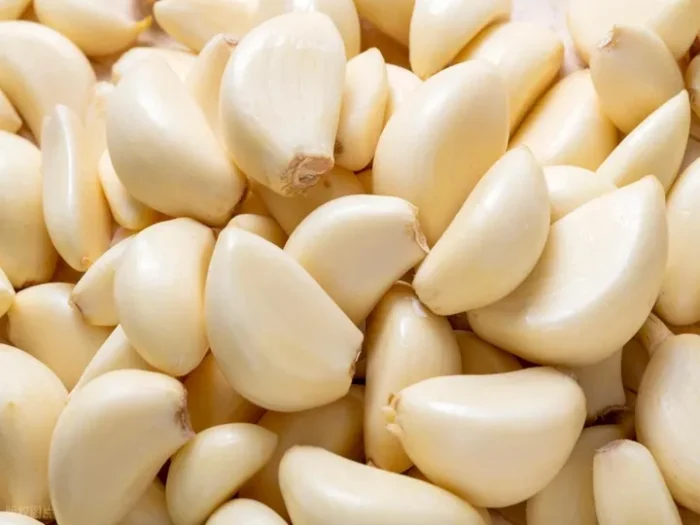

Choose a Garlic Slicer Machine Based on Your Daily Output
Capacity is the first filter. Commercial garlic slicer models on the market typically cover 300 kg/h to 600 kg/h. Your target should be based on what you can sell, not what the machine can theoretically run.
A practical sizing method:
- Under 300 kg/day: a 300 kg/h model covers your needs with one short shift.
- 300–800 kg/day: choose a 300–600 kg/h model to leave room for growth.
- Over 1,000 kg/day: consider two units instead of one oversized machine. Two smaller slicers let you run garlic on one and ginger on the other.
Running a machine at 30% capacity wastes electricity and cleaning time. Running one at full capacity every day leaves no buffer for order peaks. Aim for 70–80% utilization.
Decide Your Garlic Slice Format Before Comparing Models
This is the decision most buyers skip, and it causes the most regret. There are two main cutting designs, and they produce different products.
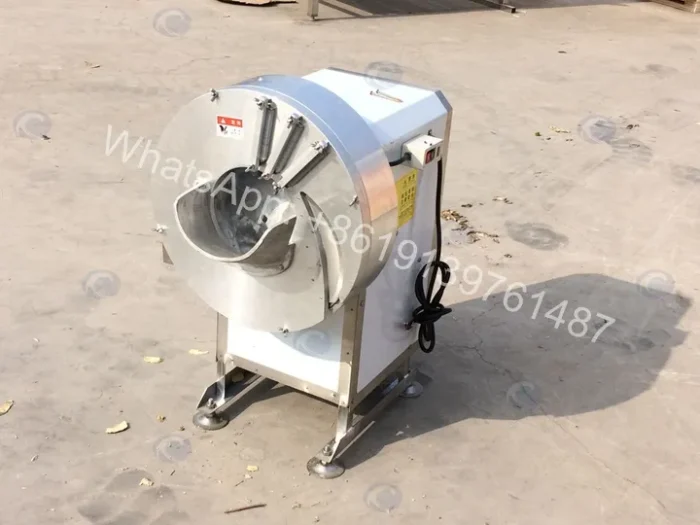
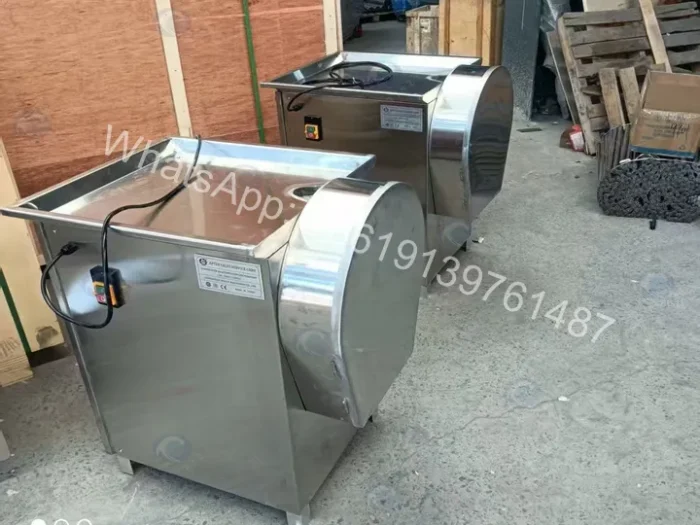
Rotary Disc Type: Adjustable Round Slices
The rotary disc design cuts garlic into round slices with thickness adjustable from 2 mm to 12 mm. If your business sells multiple products, such as 2 mm slices for seasoning powder and 6 mm slices for pickled garlic, this flexibility matters.

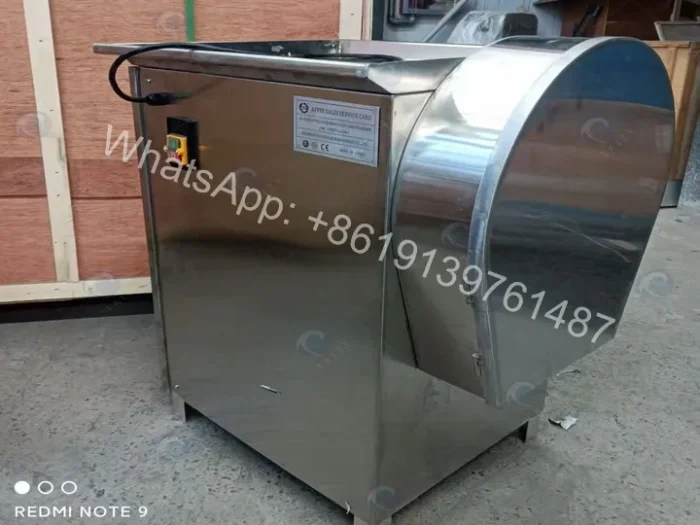
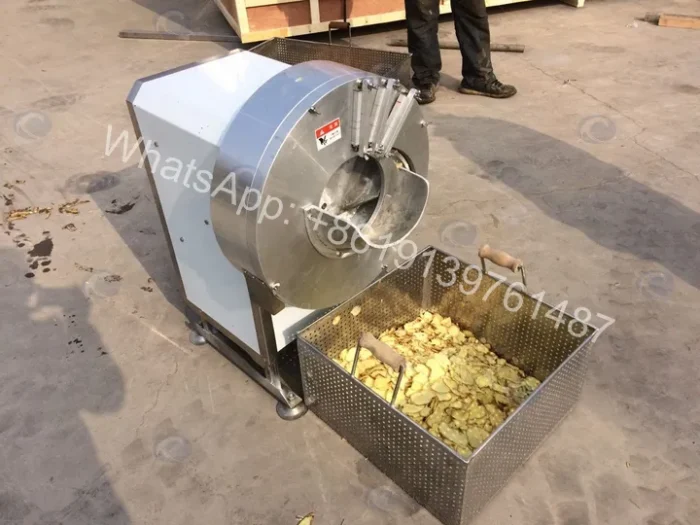
Centrifugal Type: Full-Length Slices and Strips
The centrifugal design feeds cloves through a cylindrical chamber and cuts along their length. The output keeps the full length of the raw material. Processors selling premium dehydrated ginger or long garlic strips for food service usually prefer this format.
Ask yourself: do buyers pay more for long, intact slices in your market? If yes, the centrifugal type earns back its cost through higher product grade. If you need frequent thickness changes, the disc type saves reconfiguration time.
Match the Slicing Machine to Your Raw Materials
A ginger slicer machine and a garlic slicer share most components, but material behavior differs. Check these points against your real materials:
- Garlic cloves: small and slippery. Both models self-feed cloves by centrifugal force, so no pre-sorting by size is needed.
- Fresh ginger: fibrous and curved. Full-length cutting preserves fiber, which matters for dried ginger quality.
- High-moisture materials: wet garlic cuts more easily than very dry garlic. Extremely dry garlic may powder at the blade instead of slicing.
- Mixed vegetables: if you also slice potato, lotus root, radish, or taro, confirm the blade geometry handles denser materials without chipping.
List every material you plan to process in the next 12 months, and share it with the supplier before ordering. A five-minute conversation avoids a machine that fits garlic but jams on yam.


Check Power Supply Requirements Before Choosing a Model
Electrical requirements eliminate many options before price does. This step should come before you compare quotations.
- 220V single phase: standard in most homes, market stalls, and small workshops. The centrifugal type typically runs on this supply.
- 380V three phase: standard in industrial plants. The rotary disc type at 0.75 kW usually requires it.
- 110V/60Hz: required in the US, Canada, and parts of Latin America. Confirm the factory can fit a matching motor before payment.
If your facility only has single-phase power, choosing a three-phase-only model means paying for electrical upgrades before the machine arrives. That cost belongs in your budget from day one.
Calculate the Total Cost of a Garlic Slicer Machine
A complete purchase budget has four parts:
| Cost Item | What to Include |
|---|---|
| Machine price | Base unit, blades, spare belt set |
| Electrical work | Wiring, breakers, three-phase upgrade if needed |
| Shipping and customs | Sea or air freight, insurance, import duty |
| Commissioning | First batch materials, operator training time |
Buyers who budget only for the machine often stall at installation. Ask the supplier for a delivered price to your port, and confirm the HS code with your customs broker so duty estimates are realistic.
How to Evaluate a Garlic Slicer Machine Supplier?
Two machines with identical parameters can deliver very different ownership experiences. Compare suppliers on these points:
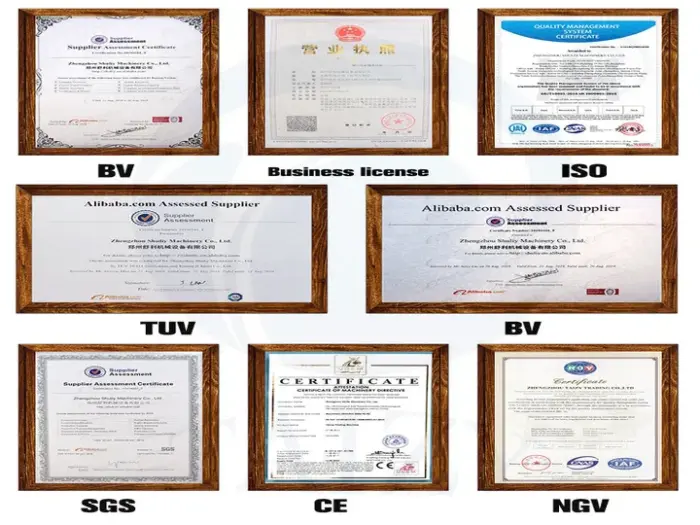
- Material: food-contact parts must be SS304, not ordinary steel.
- Testing: request factory test videos with real garlic before shipment.
- Spare parts: blades and belts should be available with international shipping.
- Support: video installation guidance and same-day messaging response.
- References: ask for customers in your region or your industry.
A supplier who asks about your materials, voltage, and target products before quoting is usually a safer partner than one who sends a price list in five minutes.

A Simple 6-Step Garlic Slicer Machine Selection Checklist
Follow this sequence to reach a confident decision:
- Calculate daily output based on real sales or supply contracts.
- Choose the slice format your buyers actually pay for.
- List all materials you will process in the next year.
- Confirm your power supply and voltage standard.
- Request quotations from two or three suppliers with full details.
- Verify testing and support terms before placing the deposit.
Each step takes minutes. Skipping any of them takes months to undo.
Common Mistakes Buyers Make
Buying maximum capacity. A 600 kg/h machine running at 100 kg/day consumes cleaning labor and floor space without generating revenue.
Ignoring slice format. A processor who exports premium dried ginger but buys a short-slice model loses the price premium that justified the investment.
Assuming voltage compatibility. “It plugs in” is not the same as “it runs safely.” Motor damage from wrong voltage voids warranties.
Skipping material testing. Garlic slices perfectly in a factory video. Your local ginger, with different fiber and moisture, may behave differently. Request a test with your material if volumes are large.
Final Tips for Choosing the Right Garlic Slicer Machine
The right garlic slicer machine is the one that matches your output, your slice format, your materials, and your power supply. Price matters, but it comes after those four factors. Buyers who define their needs first receive accurate quotations faster and avoid expensive retrofits later.
Ready to compare configurations? Contact Taizy Machinery with your daily output, target slice format, and local voltage. Our engineers will recommend the right garlic sli