
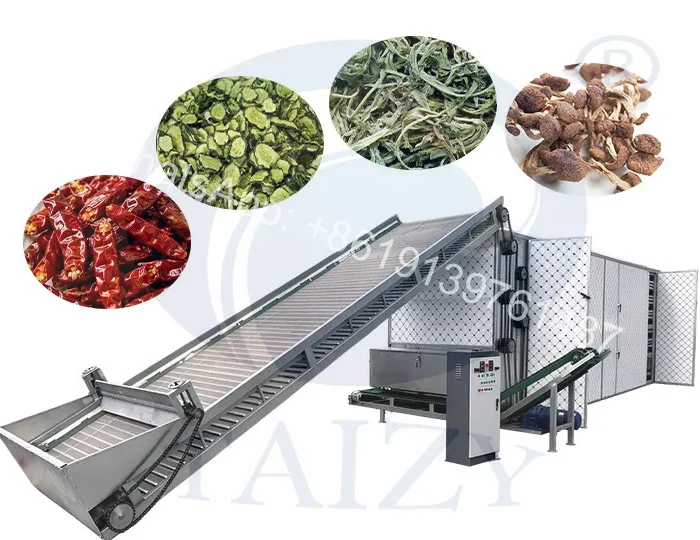
Ан промышленная машина для обезвоживания овощей is a continuous-flow drying system designed to remove moisture from sliced or whole vegetables and fruits as they travel on food-grade mesh belts through a heated drying tunnel. It can process 200 to 3,000 kg of raw material per day depending on the model, converting fresh cabbage, carrot, ginger, yam, grape, and kiwi slices into uniformly dried products suitable for dehydrated food production, seasoning manufacturing, herbal processing, and snack production.
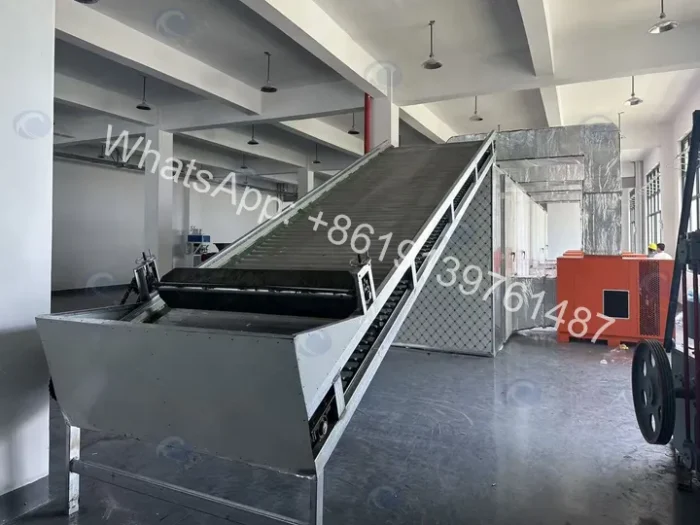
Compared with batch tray dryers, this machine offers continuous feeding and discharge, recirculating hot air that saves 30–50% energy, and multi-layer belts that multiply output per square meter of floor space. The intelligent control panel stores drying recipes for temperature, air volume, and time, so every batch keeps the same color, moisture level, and shape. Buyers also choose the heat source that fits their market, with electricity, steam, coal, heat pump, and biomass pellet options available. It is ideal for dehydrated vegetable exporters, herb processors, and food factories replacing sun drying and manual tray handling.
With over 20 years of drying equipment manufacturing experience and exports to 40+ countries, Taizy customizes every vegetable drying machine to the buyer’s product, capacity, and energy conditions, backed by a one-year warranty and lifetime technical support.
Industrial Vegetable Dehydration Machine Technical Parameters
| Model (belt width × length) | Layers | Длина сушки | Размер установки | Drying box size | Горячая печь | Fan |
|---|---|---|---|---|---|---|
| 2 m × 7 m | 4 | 60 m | 12 × 4 × 2.8 m | 7 × 2.1 × 2.2 m | — | 15 kW |
| 2 m × 7 m | 6 | 90 m | 12 × 4 × 3 m | 7 × 2.1 × 2.85 m | 3 × 1.8 × 2.4 m | 15 kW |
| 2 m × 9 m | 4 | 76 m | 16 × 4 × 2.8 m | 9 × 2.1 × 2.2 m | — | 15 kW |
| 2 m × 9 m | 6 | 114 m | 16 × 4 × 3 m | 9 × 2.1 × 2.85 m | 3 × 1.8 × 2.4 m | 15 kW |
| 2 m × 12 m | 4 | 100 m | 19 × 4 × 2.8 m | 12 × 2.1 × 2.2 m | — | 15 kW |
| 2 m × 12 m | 6 | 150 m | 19 × 4 × 3 m | 12 × 2.1 × 2.85 m | 4 × 2.5 × 2.7 m | 15 kW |
| 2 m × 15 m | 4 | 120 m | 21 × 4 × 2.8 m | 15 × 2.1 × 2.2 m | — | 15 kW |
| 2 m × 15 m | 6 | 180 m | 21 × 4 × 3 m | 15 × 2.1 × 2.85 m | 4 × 2.5 × 2.7 m | 15 kW |
Conveyors: feeding conveyor 3.5 × 1.9 × 0.35 m (5 × 2.2 × 0.35 m on 12–15 m models); discharge conveyor 2.5–2.8 m. All machines are customized to the buyer’s product, capacity, and energy source.
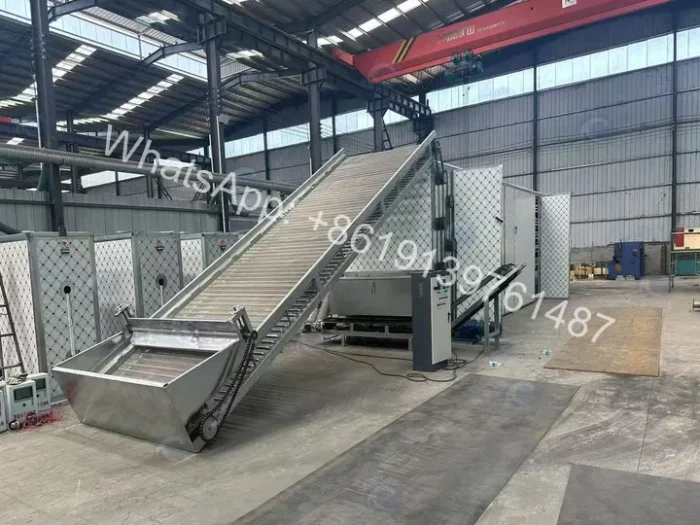
How Does Each Module of the Vegetable Drying Machine Work?
Feeding Conveyor
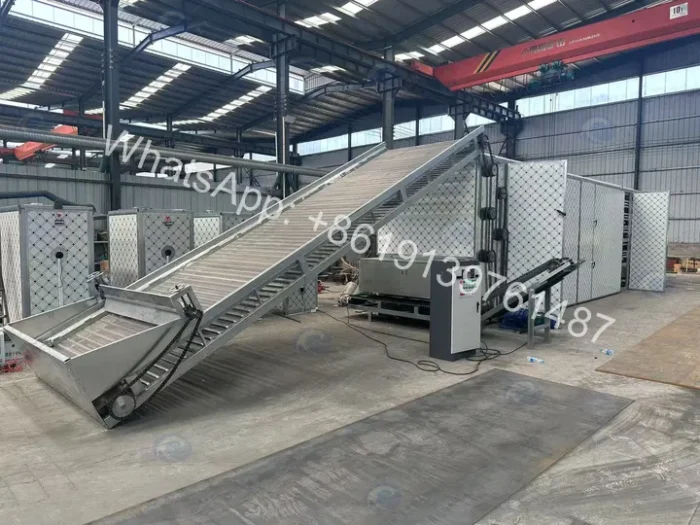
Washed or sliced material spreads evenly onto the belt. Even spreading is the single biggest factor in uniform drying. The feeder adjusts layer thickness for leafy products versus dense root slices.
Multi-Layer Mesh Belt Drying Box
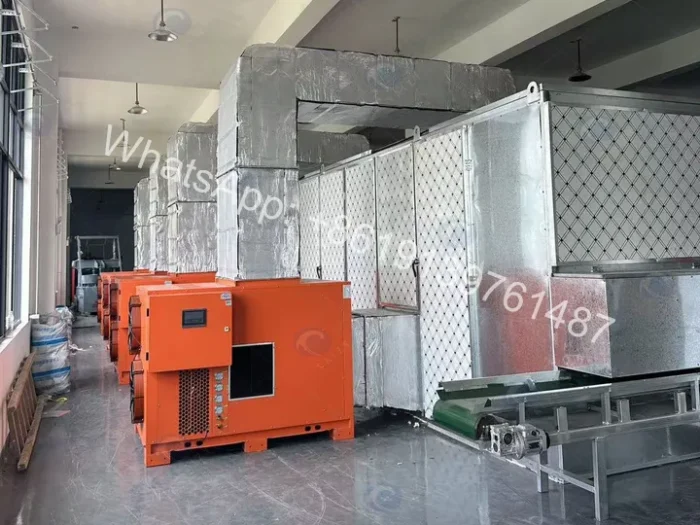
The belt carries product through the insulated box while circulation fans blow heated air through the mesh. Material moves layer by layer downward, which doubles or triples output per square meter of floor space.
Recirculating Air System
Up to 70–80% of hot air returns to the heating circuit after moisture removal. Fresh air enters only as needed. This design is why a continuous conveyor dryer typically uses 30–50% less energy than an open batch system of equal capacity.
Discharge and Cooling
Dried product exits at a controlled rate. A short cooling stage before packaging prevents condensation inside bags, which protects shelf life.
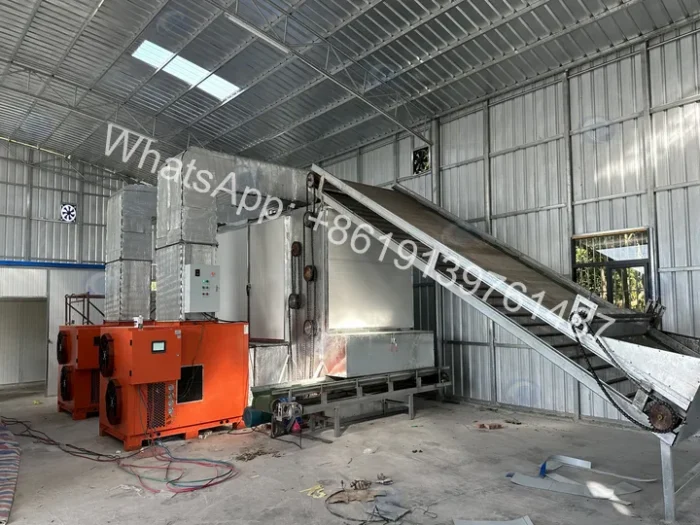
Raw Materials and Application Fields
- Vegetables: cabbage, carrot, cucumber, ginger, yam, onion, garlic slices, chili, potato, tomato
- Fruits: grape, kiwi, apple, banana, mango
- Other materials: Chinese herbal medicines, tea leaves, flower petals, seaweed, spice slices

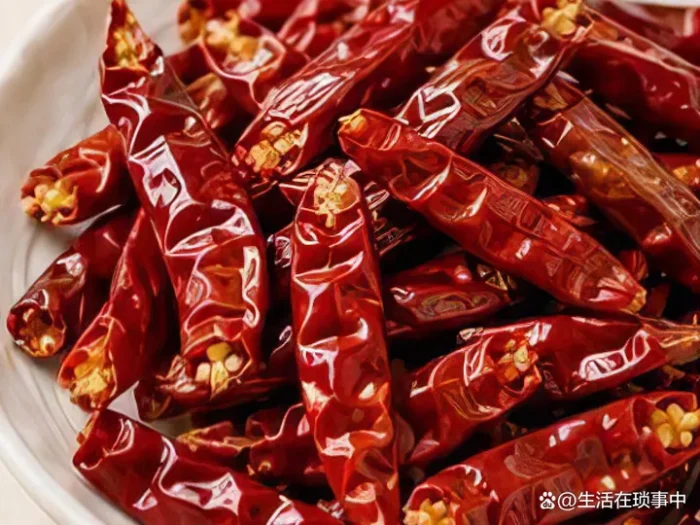
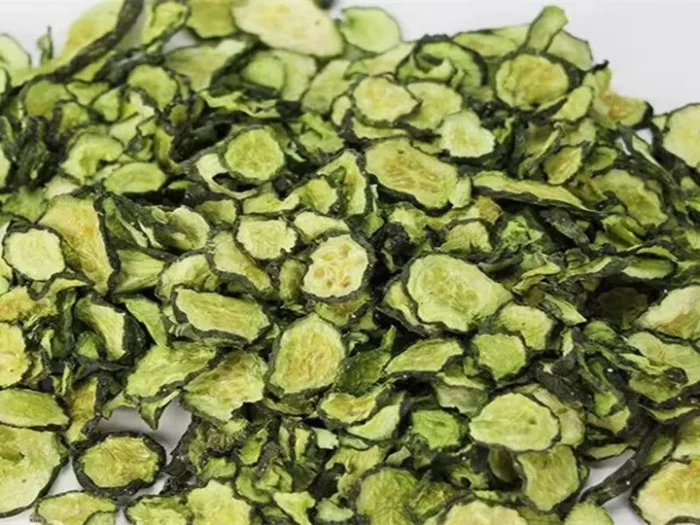

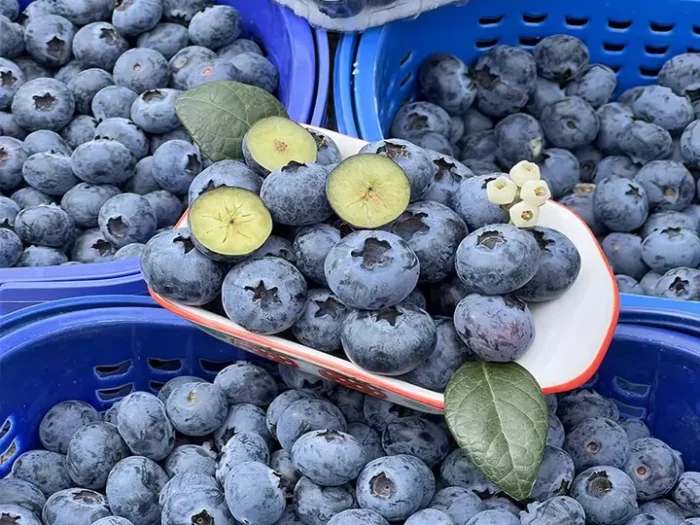
Typical buyers: dehydrated vegetable exporters, herb processing plants, fruit chip producers, seasoning factories, agricultural cooperatives adding value to seasonal harvests
Machine Advantages: Continuous Dryer vs Batch Tray Dryer
| Comparison Point | Batch Tray Dryer | Taizy Industrial Vegetable Dehydration Machine |
|---|---|---|
| Operation | Load, dry, unload in cycles | Continuous feeding and discharge |
| Labor | Trays handled by workers every cycle | One operator monitors the panel |
| Drying uniformity | Varies between trays and positions | Identical recipe for every kilogram |
| Floor space per kg output | High | Low, thanks to multi-layer belts |
| Energy use | Heat lost at every door opening | Most air recirculated |
| Capacity scaling | Buy more cabinets | Extend belt length or add layers |
The mesh belt dryer format also protects product shape. Slices stay on the belt without tumbling, so fragile products such as kiwi or herbal leaves keep their appearance.
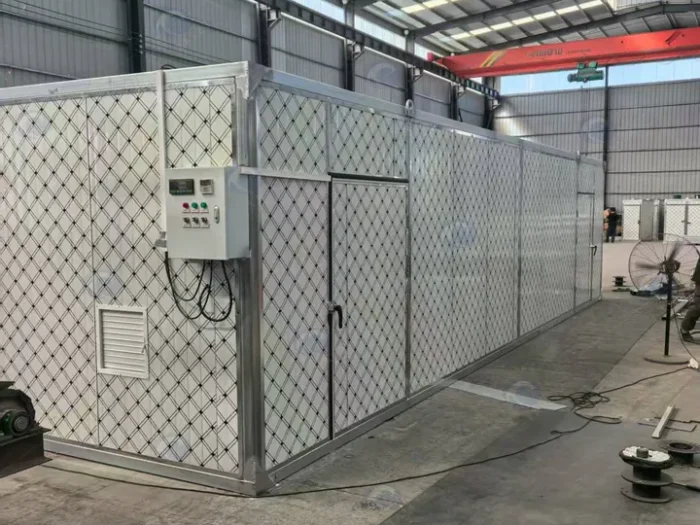
Working Principle and Technical Analysis
Wet material enters the feeding conveyor and forms an even layer on the first mesh belt. Heated air, generated by the hot stove or electric heat exchanger, passes through the product bed. Moisture evaporates and exits with the exhaust air stream, while the recirculation fan returns most of the still-hot air to the heating circuit.
Three parameters control the result:
- Temperature: set between 40°C and 120°C depending on product heat sensitivity.
- Air volume: adjusted through the circulating induced draft fan.
- Residence time: controlled by belt speed and the number of layers.
Because each product loses moisture at a different rate, the control panel stores recipe settings. Switching from carrot slices to cabbage takes minutes, not hours of trial runs.
Customer Pain Points This Vegetable Drying Machine Solves
| Pain Point | Solution | Result |
|---|---|---|
| Batch dryers bottleneck at harvest peaks | Continuous operation runs 8–24 hours | Daily output matches raw material intake |
| Uneven drying creates mold risk | Controlled temperature and belt speed | Uniform moisture in every batch |
| High fuel or electricity bills | Recirculating hot air system | 30–50% energy saving vs open drying |
| Trays consume labor hours | Automatic belt conveying | One operator replaces 4–6 tray handlers |
| Rain ruins sun-dried product | Enclosed insulated drying box | Year-round production regardless of weather |
| Export buyers reject discolored product | Gentle airflow, no combustion contact | Bright color and intact shape |
Why Choose Taizy for Your Vegetable Drying Machine?
- Custom configuration matched to your product’s moisture curve, not a one-size catalog machine
- Five heat source options: electricity, steam, coal, heat pump, biomass
- SS304 food-grade mesh belt with smooth welds for sanitation
- 15 kW circulation fan engineered for stable airflow across the full belt width
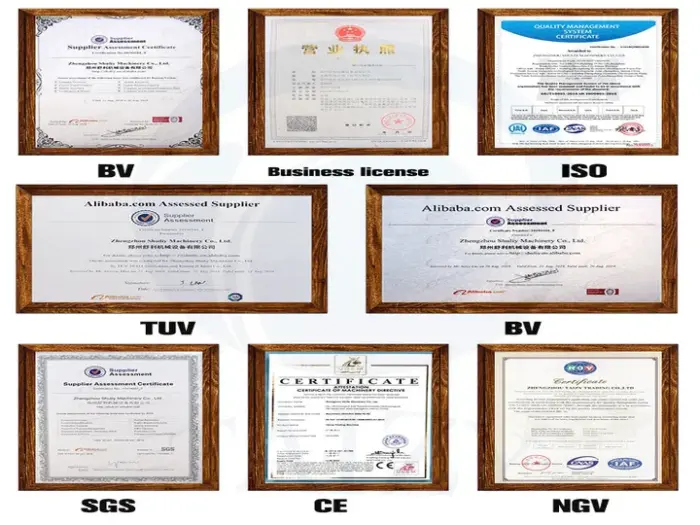
- ISO 9001 and CE-certified manufacturing
- One-year warranty plus lifetime technical support by video call
- 40+ export countries, with voltage and plug customization for your market
- Video outgoing inspection before every shipment
Сопутствующее оборудование
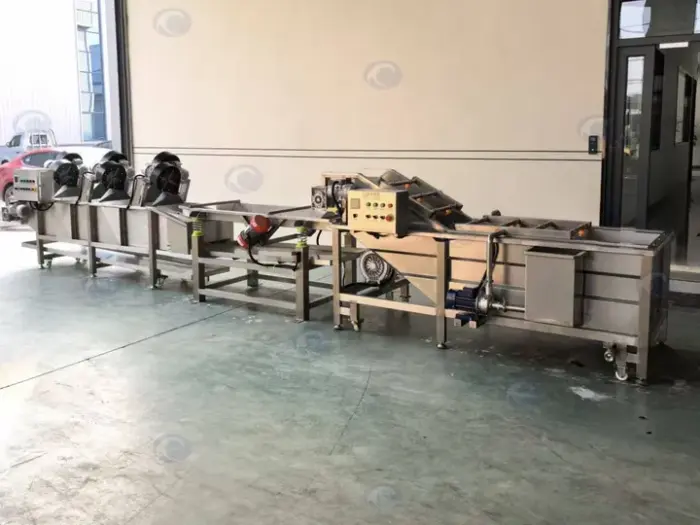
Линия мойки и сушки фруктов и овощей
This modular automatic produce processing line reaches 500‑2000 kg/h throughput, adopting bubble washing plus multi‑angle air‑blow drying. Built with a full SUS304 stainless‑steel structure and a frequency‑conversion speed‑adjustable conveyor. It cleans and removes surface moisture for fruits, vegetables, herbs, serving as ideal pre‑processing unit matching the box‑type drying room: clean, surface‑dry materials flow into the drying chamber, improving overall dehydration efficiency and finished‑product quality for dehydrated vegetable factories and food processing plants.
- Core Points: Modular combination, gentle, non-damaging cleaning; pre‑treatment partner for box‑type drying room.
- After‑sales: 12‑month full‑machine warranty, customizable belt width and production capacity.
Ready to size an industrial vegetable dehydration machine for your product? Send Taizy your raw material, target capacity, and preferred heat source. Our engineers will recommend the belt length, layer count, and heat system, then send a detailed quotation within 24 hours.
Часто задаваемые вопросы
How long does it take to dry one batch of vegetables?
Drying time depends on slice thickness and initial moisture, typically 2 to 8 hours for most vegetables and 6 to 12 hours for high-moisture fruits. The control panel stores a recipe for each product, so repeat runs need no re-testing.
What final moisture content can the machine achieve?
The dryer reduces most vegetables to 5–12% moisture, which meets export standards for dehydrated products. Target levels are set per product and verified with a moisture meter after commissioning.
Will sticky fruits like mango or banana stick to the mesh belt?
High-sugar fruits can stick on standard mesh. Taizy offers food-grade non-stick belt coatings and slightly raised air temperatures at the feeding end to form a thin surface crust that prevents adhesion.
What site preparation is required before installation?
Buyers need a level concrete floor, overhead clearance of at least 3.5 m, exhaust ducting for moist air, and electrical connections matched to the chosen heat source. Taizy provides a foundation and utility layout drawing with every order.
How do you clean the mesh belt between different products?
The belt section opens for wash-down with a high-pressure hose. Removable side guards and SS304 welds leave no dirt traps, and a 30-minute rinse cycle prepares the machine for a different product.
Can different temperature zones be set along the drying tunnel?
Yes. Longer models are divided into two or three zones. The first zone runs hotter for fast surface drying, while later zones use gentler heat to finish the interior without over-drying the surface.
What spare parts should buyers keep in stock?
We recommend one spare mesh belt section, fan belts, and door seals. These parts wear gradually and are easy to replace during routine maintenance.
Does the dryer work in cold or high-humidity climates?
Yes. The insulated box and recirculating system keep drying stable in ambient temperatures down to -10°C. In very humid regions, a slightly higher fresh-air ratio and heat pump option prevent moisture buildup inside the tunnel.