
Jika Anda menjalankan peternakan ulat bambu komersial, penyortiran manual dengan cepat menjadi hambatan produksi. Memisahkan larva hidup dari serangga mati, kepompong, kotoran, dan kulit yang terlepas dengan tangan memerlukan banyak tenaga dan skalanya tidak konsisten.
Mesin penyortiran ulat bambu otomatis mengatasi masalah ini melalui sistem pemisahan mekanis dan optik tiga tahap yang berkelanjutan. Artikel ini menjelaskan dengan tepat bagaimana proses bekerja mulai dari pemberian makan hingga hasil akhir.
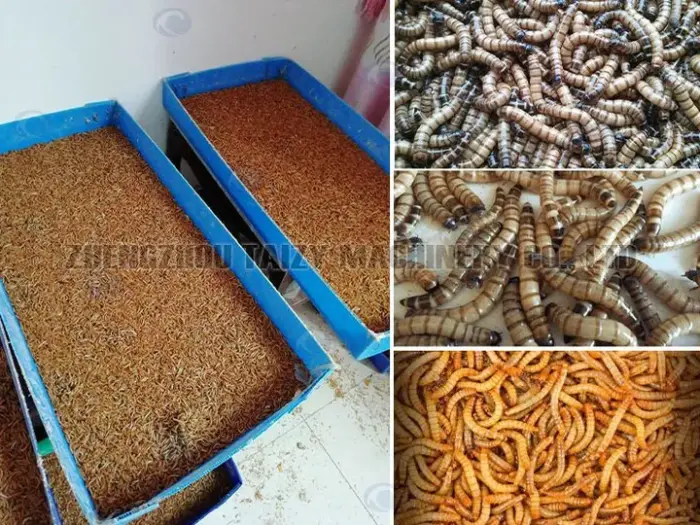
Apa Fungsi Mesin Sortasi Mealworm?
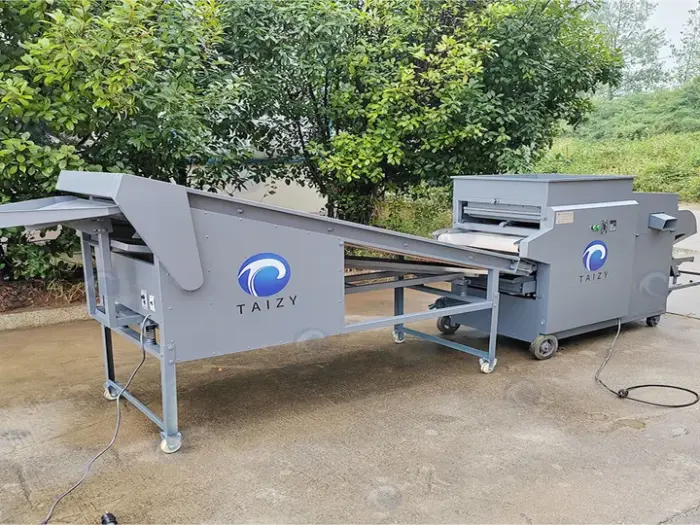
Sistem penyortiran ulat bambu profesional melakukan beberapa tugas pemisahan secara bersamaan:
- Penghapusan frass (pemisahan limbah serangga)
- Ekstraksi kulit dan debu
- Penilaian ukuran (larva besar, sedang, kecil)
- Pemisahan pupa
- Pembasmian serangga mati
Daripada menangani proses ini secara terpisah, mesin mengintegrasikannya ke dalam satu alur kerja otomatis yang berkelanjutan.
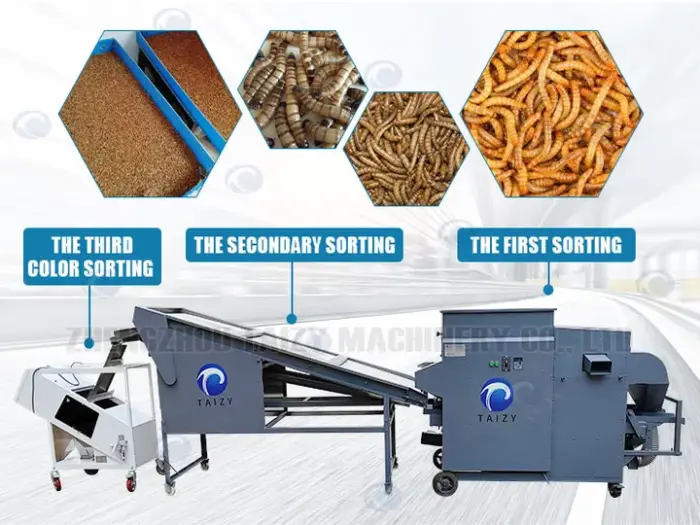
Proses Pemisahan Tiga Tahap
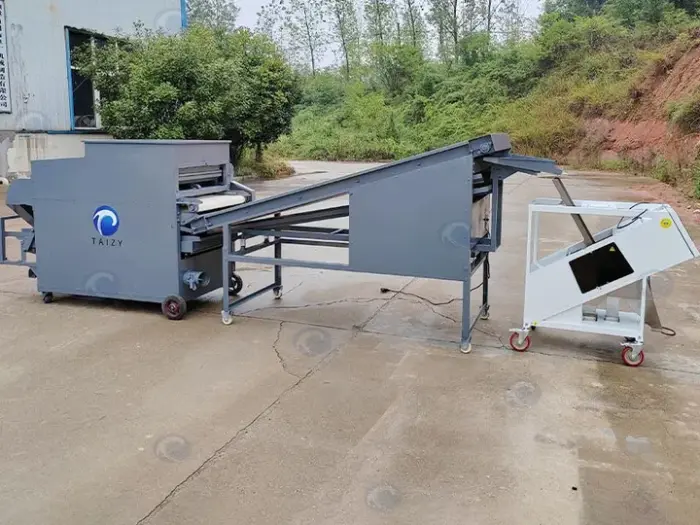
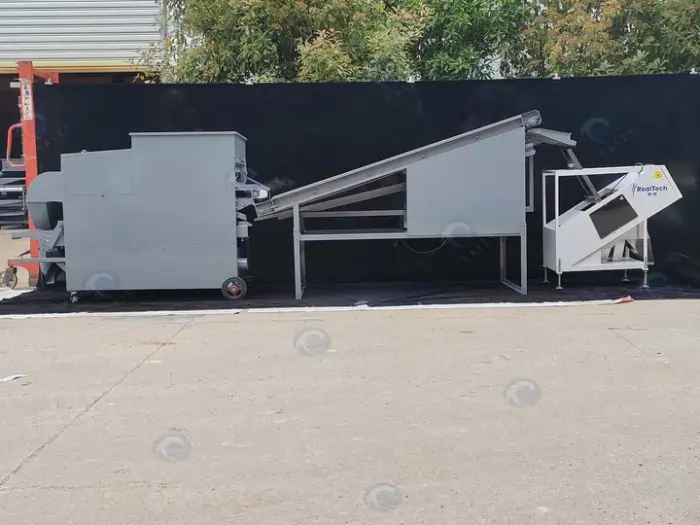
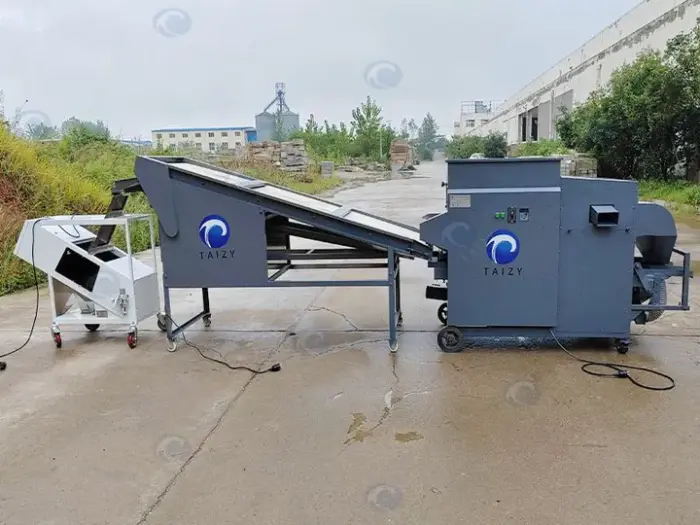
Peralatan penilaian serangga modern biasanya beroperasi melalui tiga tahap yang terkoordinasi. Setiap tahap menargetkan tantangan pemisahan tertentu, dengan material mengalir secara otomatis dari satu unit ke unit berikutnya tanpa transfer manual.
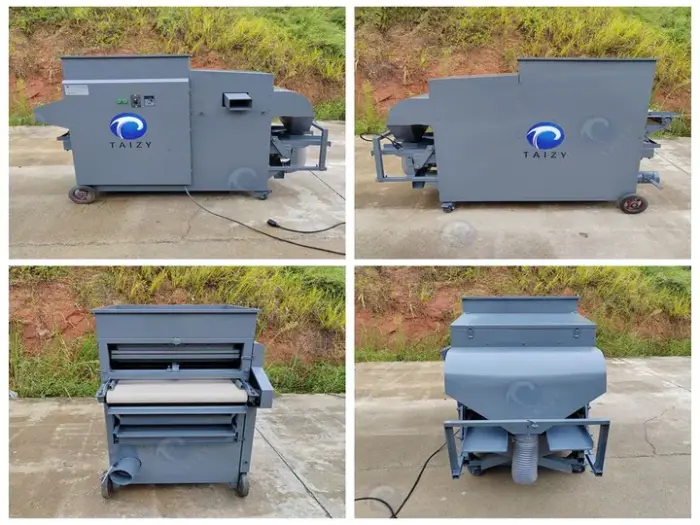
Tahap 1: Pemisahan Mekanis Primer
Bahan mentah memasuki unit pemisah utama melalui feed hopper. Tahap pertama ini melakukan pekerjaan pemisahan berat melalui gabungan aksi mekanis dan pneumatik.
Pemutaran Frass
Materi mendarat di layar jaring yang bergetar dengan lubang berukuran tepat. Partikel frass dan serpihan halus jatuh melalui jaring ke dalam wadah pengumpul di bawah, sementara larva tetap berada di permukaan layar. Konfigurasi standar menggunakan saringan atas 26 mata jaring dengan saringan bawah 3 mm dan 2 mm, meskipun operator dapat menukar ukuran mata jaring untuk tahap larva yang berbeda.
Ekstraksi kulit dan debu
Kipas hisap terintegrasi yang ditempatkan di atas zona penyaringan menciptakan aliran udara terkontrol yang mengangkat kulit ringan dan partikel debu menjauh dari larva yang lebih berat. Kotoran ini terkumpul dalam kantong filter yang terpasang, menjaga lingkungan pemrosesan tetap bersih dan mencegah partikel kulit mengkontaminasi produk jadi.
Penilaian Ukuran Awal
Sistem ban berjalan dua lapis memisahkan larva berdasarkan dimensi fisik saat mereka bergerak melintasi permukaan penyaringan. Larva yang lebih besar tetap berada di sabuk atas, sedangkan spesimen yang lebih kecil jatuh ke tingkat yang lebih rendah. Penilaian awal ini mengurangi beban kerja pada tahap pemisahan hilir.
Pemisahan Pupa Primer dan Serangga Mati
Pada tahap ini, sistem membuat pembedaan awal antara larva aktif dan material tidak bergerak. Pupa dan serangga mati berperilaku berbeda pada permukaan yang bergetar dibandingkan larva hidup, sehingga memungkinkan pemisahan dasar sebelum penyortiran optik menyempurnakan hasilnya.
Tahap 2: Penyempurnaan Sekunder
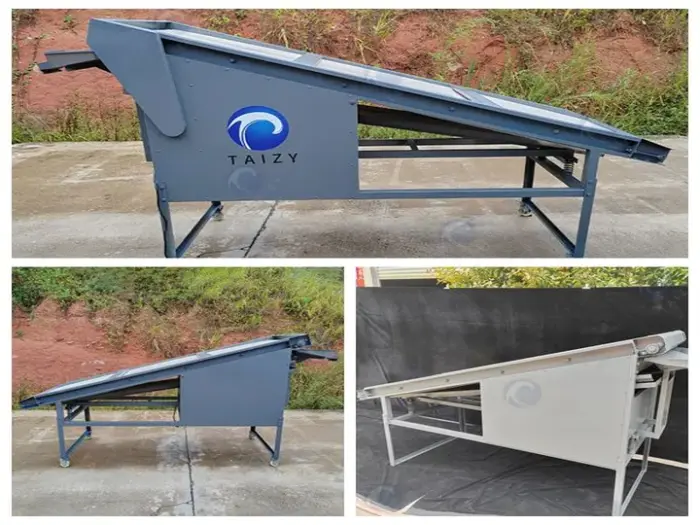
Materi yang melewati pemisah utama—khususnya larva berukuran kecil dan pemisahan garis batas—dipindahkan ke unit pemilahan sekunder untuk pemrosesan tambahan.
Ketinggian dan Evaluasi Ulang
Unit sekunder mengangkat material dari titik pembuangan pemisah utama’s dan mengirimkannya ke jalur penyaringan lainnya. Evaluasi kedua ini menangkap larva yang mungkin salah klasifikasi selama pemisahan primer karena pengelompokan atau pemberian pakan yang tidak merata.
Resirkulasi Larva yang Sehat
Larva yang diidentifikasi oleh unit sekunder sebagai sehat dan berukuran tepat secara otomatis kembali ke aliran masukan pemisah’s utama untuk dinilai ulang. Lingkaran resirkulasi ini meminimalkan hilangnya produk berharga dan meningkatkan akurasi pemisahan secara keseluruhan.
Penyaluran Puing
Materi yang dikonfirmasi sebagai pupa, serangga mati, atau serpihan non-larva dibawa ke unit penyortir warna opsional. Aliran terarah ini mencegah kontaminasi ulang pada larva sehat yang sudah disortir dan menyederhanakan penanganan limbah.
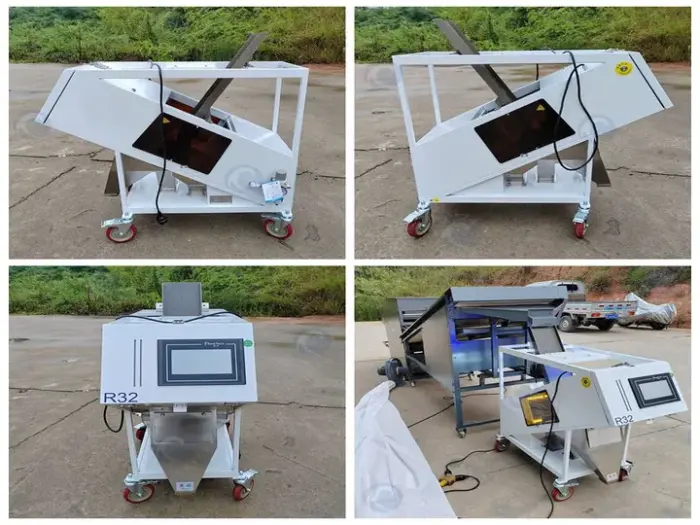
Tahap 3: Penyortiran Warna Optik
Tahap pemurnian akhir menggunakan teknologi visi mesin untuk mencapai presisi yang tidak dapat ditandingi oleh pemisahan mekanis saja.
Deteksi Sensor Warna
Sensor optik resolusi tinggi memindai setiap bagian material saat melewati ruang tampilan penyortir warna’s. Sistem ini mengenali variasi warna antara larva emas yang sehat, serangga mati berwarna hitam, dan kotoran yang tidak berwarna.
Ejeksi Pneumatik
Saat sensor mengidentifikasi material yang tidak sesuai target, pancaran udara dengan waktu yang tepat akan mengeluarkan bagian yang tidak diinginkan dari aliran produk. Larva yang sehat melanjutkan jalur produk yang disetujui. Proses ejeksi ini beroperasi pada kecepatan tinggi, menjaga throughput sekaligus mencapai akurasi yang luar biasa.
Keluaran Produk Akhir
Larva yang keluar dari penyortir warna mewakili produk jadi—ukurannya sesuai, bebas dari serangga mati dan kotoran, dan siap untuk dikemas atau diproses lebih lanjut. Dalam kondisi pengoperasian standar pada suhu 25°C ke atas, proses tiga tahap ini mencapai akurasi pemisahan 99%+.
Parameter Operasi Utama
Memahami variabel yang dapat disesuaikan membantu Anda mengoptimalkan kinerja pemisah ulat bambu untuk berbagai kondisi bahan mentah.
Kecepatan Sabuk Konveyor
Penggerak frekuensi variabel mengontrol kecepatan sabuk penyortiran atas dan bawah. Kecepatan yang lebih lambat meningkatkan akurasi pemisahan untuk material yang sulit namun mengurangi throughput per jam. Kecepatan yang lebih cepat memaksimalkan produksi ketika kualitas bahan baku konsisten.
Volume Aliran Udara Kipas
Laju aliran udar’a kipas hisap menentukan seberapa efektif sistem menghilangkan kulit ringan dan debu. Aliran udara yang lebih tinggi meningkatkan ekstraksi tetapi membutuhkan lebih banyak tenaga dan dapat mengangkat larva kecil jika diatur terlalu agresif. Operator menyeimbangkan efisiensi ekstraksi dengan retensi produk.
Tingkat Umpan
Pengumpanan material yang konsisten mencegah kelebihan beban pada layar dan mempertahankan kinerja pemisahan yang stabil. Sebagian besar operator menggunakan kontrol kecepatan variabel feeding elevator’s untuk menyesuaikan produksi hulu dengan kapasitas penyortiran hilir.
Pemilihan Layar
Ukuran mata jaring yang berbeda mengakomodasi larva pada berbagai tahap pertumbuhan. Larva instar pertama membutuhkan layar yang lebih halus dibandingkan larva dewasa. Bingkai layar yang dapat dilepas dengan cepat memungkinkan pergantian dalam hitungan menit tanpa alat.
Apa Yang Terjadi Tanpa Setiap Tahap
Memahami nilai komponen membantu Anda memutuskan konfigurasi mana yang sesuai dengan kebutuhan operasional Anda.
Tanpa Penyortir Sekunder
Penyiapan dua unit dasar (pemisah utama ditambah penyortir warna) tetap memberikan hasil yang baik untuk bahan mentah yang bersih dan seragam. Namun, Anda kehilangan manfaat resirkulasi dan penyaringan sekunder, yang berpotensi mengurangi akurasi sebesar 3-5% dan meningkatkan kehilangan produk.
Tanpa Penyortir Warna
Pemisahan mekanis sendiri menangani frass, kulit, dan penilaian ukuran secara efektif. Namun, membedakan serangga mati dari larva hidup hanya dengan cara mekanis saja tidak dapat diandalkan. Tanpa penyortiran optik, kemungkinan ada larva yang mati pada produk jadi kecuali Anda melengkapinya dengan pemetikan manual.
Tanpa Aliran Udara yang Tepat
Pengoperasian dengan daya hisap yang tidak memadai akan meninggalkan kulit dan debu di aliran produk, sehingga menurunkan penampilan dan berpotensi menyebabkan masalah pernapasan bagi pekerja. Aliran udara yang tidak memadai juga memungkinkan serpihan halus menumpuk di layar, sehingga mengurangi efisiensi pemisahan seiring waktu.
Ekspektasi Kinerja Dunia Nyata
Pengujian laboratorium dan data operasi lapangan memberikan tolok ukur yang realistis untuk kinerja penyortir serangga otomatis.
Pengolahan Larva Hidup Segar
Konfigurasi dua unit standar (penyortir utama dan sekunder) memproses 400-600 kg larva segar per jam. Produksi ini mengasumsikan bahan mentah yang cukup bersih dengan proporsi frass dan kulit yang normal.
Pengolahan Larva Pra-Kering
Menambahkan penyortir warna dan memproses bahan pra-kering akan meningkatkan hasil hingga 500-700 kg/jam. Material yang lebih kering mengalir lebih bebas melalui layar dan ruang optik, sehingga memungkinkan laju pengumpanan lebih tinggi tanpa kehilangan akurasi.
Akurasi Dalam Kondisi Standar
Pada suhu pengoperasian 25°C ke atas, dengan pemilihan saringan yang tepat dan aliran udara yang dikalibrasi, sistem tiga tahap secara konsisten mencapai kemurnian 99%+ pada produk jadi. Suhu yang lebih dingin memperlambat pergerakan larva dan mungkin sedikit mengurangi efisiensi pemisahan mekanis.
Tantangan Operasional Umum
Bahkan peralatan pemilahan ulat bambu yang dirancang dengan baik memerlukan pengoperasian yang tepat untuk menghasilkan kinerja terukur.
Pemberian Makan Tidak Merata
Aliran material yang tidak konsisten menciptakan kondisi kelebihan beban dan kekurangan beban yang bergantian. Layar yang kelebihan muatan memungkinkan puing-puing lewat bersama larva; kondisi underloaded kapasitas limbah. Gunakan pengumpan berkecepatan variabel untuk menjaga kedalaman material pada layar tetap stabil.
Pemilihan Layar Salah
Saringan yang terlalu kasar memungkinkan larva kecil masuk ke aliran limbah; layar yang terlalu halus menciptakan kemacetan dan mengurangi throughput. Sesuaikan bukaan layar dengan rentang ukuran larva target Anda, dan ubah layar saat memproses berbagai tahap pertumbuhan.
Pembersihan Tidak Memadai
Partikel halus dan halus terakumulasi pada saringan selama pengoperasian yang lama, sehingga secara bertahap membutakan bukaan jaring dan mengurangi efisiensi pemisahan. Pembersihan layar terjadwal—biasanya setiap 2-4 jam pengoperasian terus-menerus—mempertahankan performa tetapan.
Pengaturan Aliran Udara yang Tidak Tepat
Aliran udara yang berlebihan mengangkat larva kecil yang berharga ke dalam pengumpulan sampah; aliran udara yang tidak mencukupi meninggalkan kotoran pada produk. Kalibrasi aliran udara saat mengubah jenis bahan mentah atau kadar air.
Memilih yang Benar Mesin Sortasi Cacing Tepung
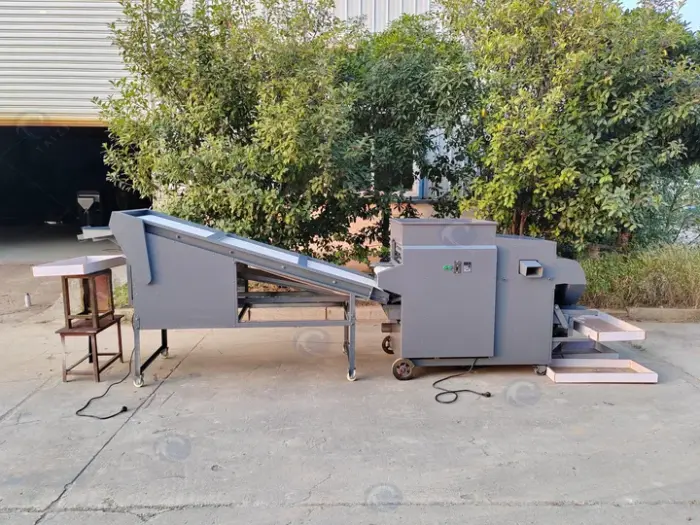
Persyaratan operasional Anda menentukan konfigurasi mesin pengolah ulat bambu mana yang memberikan nilai optimal.
Konfigurasi Dasar (Penyortir Utama + Sekunder)
Cocok untuk peternakan yang menjual larva ke pengolah perantara atau menggunakan larva untuk pakan ternak di mana kemurnian sempurna tidak terlalu penting. Menangani penghilangan pecahan, penilaian ukuran, dan pemisahan serangga mati awal secara efektif.
Konfigurasi Penuh (Ketiga Unit)
Penting untuk operasi penjualan larva kelas premium untuk konsumsi manusia, makanan hewan, atau pasar ekspor di mana kontaminasi serangga mati tidak dapat diterima. Ketepatan optik penyortir warna’ membenarkan biayanya untuk aplikasi bernilai tinggi.
HUBUNGI KAMI
Butuh solusi penyortiran ulat bambu? Hubungi Taizy Machinery untuk mendiskusikan ukuran lahan pertanian Anda, volume pemrosesan harian, dan persyaratan kualitas produk. Tim teknis kami akan merekomendasikan konfigurasi optimal dan memberikan spesifikasi rinci untuk pengoperasian Anda.