
In the fast-paced world of food processing, efficiency and consistency are paramount. A continuous vegetable blanching machine represents a significant advancement over traditional batch blanching methods, offering food processors the ability to handle large volumes of vegetables with minimal labor and maximum quality control.
Whether you’re upgrading an existing facility or building a new processing line, understanding how continuous blanching technology works—and what benefits it offers—can help you make informed decisions that impact your bottom line.
This comprehensive guide explores everything you need to know about continuous vegetable blanching machines, from their core components and working principles to the tangible benefits they deliver for modern food processing operations.
What is a Continuous Vegetable Blanching Machine?
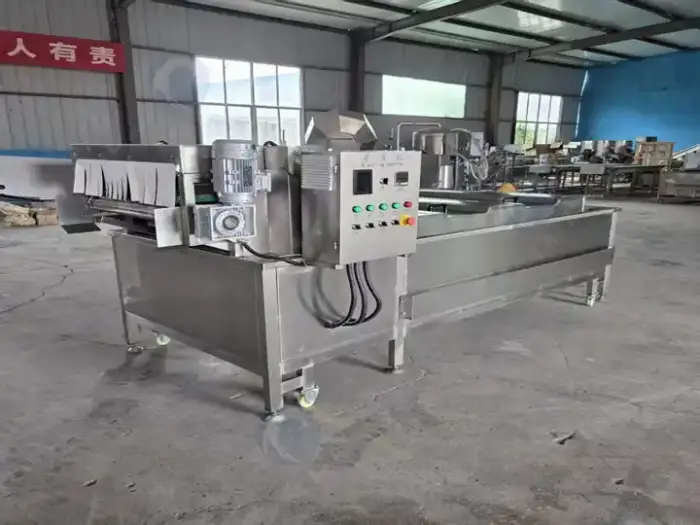
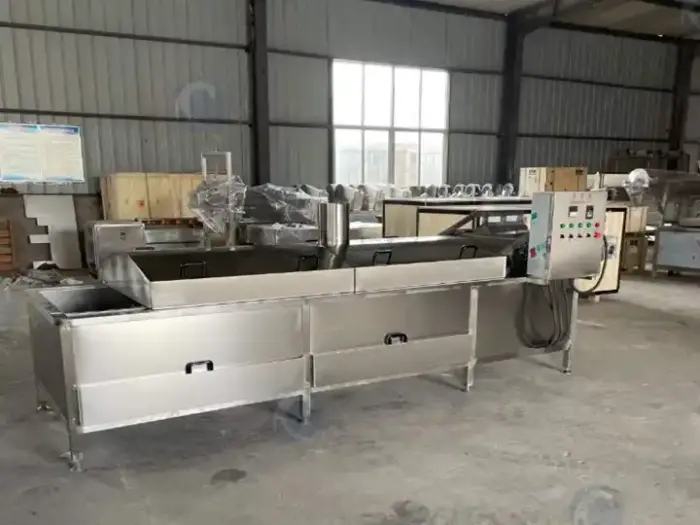
A continuous vegetable blanching machine is an industrial food processing equipment designed to heat-treat vegetables in a non-stop, automated flow. Unlike batch blanchers that process vegetables in discrete loads, continuous systems move products through heating and cooling zones on a conveyor belt, enabling uninterrupted production.
Key Characteristics:
- Non-stop operation: Vegetables enter at one end and exit at the other without interruption
- Consistent processing: Every piece receives identical heat treatment
- High throughput: Capable of processing 500 kg to 5,000+ kg per hour
- Automated control: Temperature, speed, and timing parameters are precisely managed
- Integrated workflow: Seamlessly connects with washing, cutting, cooling, and packaging equipment
How Continuous Blanching Differs from Batch Blanching
Understanding the differences between continuous and batch blanching helps explain why many processors are making the switch:
| विशेषता | Batch Blanching | Continuous Blanching |
|---|---|---|
| Operation Mode | Load → Process → Unload → Repeat | Continuous feed and discharge |
| Labor Requirements | High (loading/unloading each batch) | Low (automated feeding) |
| Throughput | Limited by batch size | Scalable to production needs |
| Consistency | Variable between batches | Uniform across all products |
| Energy Efficiency | Heat loss during batch changes | Consistent heat utilization |
| Space Requirements | Compact | Longer footprint |
| Initial Investment | Lower | Higher |
| Operating Costs | Higher labor costs | Lower labor, optimized utilities |
Key Components of a Continuous Vegetable Blanching Machine
1. Feeding System
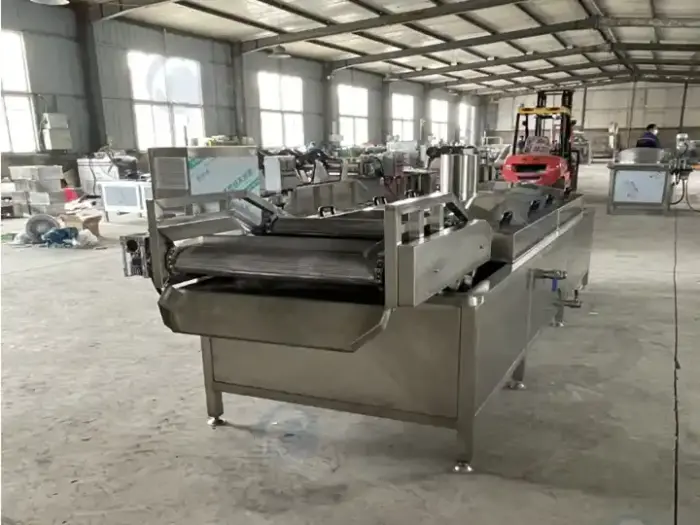
The feeding system ensures a steady, even flow of vegetables into the blanching zone. Components typically include:
- Vibrating hopper: Distributes vegetables uniformly
- Conveyor belt: Food-grade stainless steel mesh or belt with appropriate perforations
- Speed control: Variable frequency drive (VFD) for adjustable throughput
- Level sensors: Maintain consistent product depth
2. Heating Zone
The heating zone is where vegetables are exposed to high temperatures (typically 85°C to 100°C) to achieve blanching objectives:
Steam Blanching Systems:
- Direct steam injection into the processing chamber
- Rapid heat transfer and energy efficiency
- Lower water consumption
- Ideal for delicate vegetables
Water Blanching Systems:
- Immersion in heated water bath
- Uniform heat distribution
- Better for dense vegetables requiring longer heat penetration
- Integrated water circulation and filtration
3. Temperature Control System
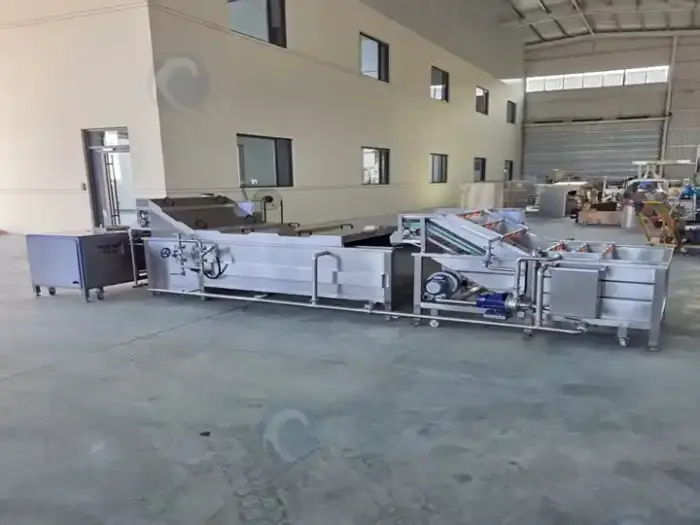
Modern continuous blanchers feature sophisticated temperature management:
- PLC (Programmable Logic Controller): Central control unit managing all parameters
- Temperature sensors: Multiple probes throughout the heating zone
- Steam/water flow controls: Automatic adjustment to maintain setpoints
- HMI (Human-Machine Interface): Touchscreen for operators to monitor and adjust settings
- Data logging: Records temperatures, speeds, and production volumes for quality documentation
4. Cooling Zone
Immediate cooling after blanching is critical to stop the cooking process:
- Water cooling bath: Cold water immersion (5°C to 15°C)
- Air cooling section: Ambient or refrigerated air blast
- Counter-flow design: Cold water enters at discharge end for optimal efficiency
- Temperature transition monitoring: Ensures vegetables reach safe temperatures
5. Discharge System
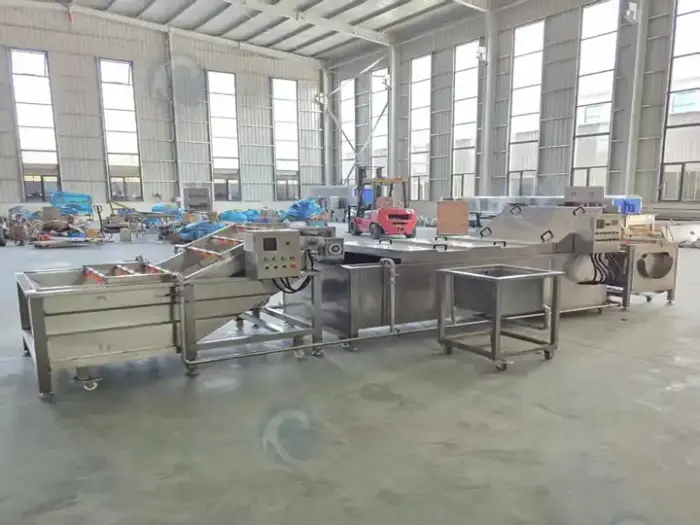
The discharge system moves blanched vegetables to the next processing stage:
- Elevating conveyor: Lifts products from cooling bath
- Dewatering section: Air knives or vibrating decks remove excess water
- Distribution conveyor: Routes products to freezing, packaging, or further processing
6. Support Systems
Water Management:
- Make-up water supply
- Filtration and recirculation
- Wastewater discharge
Steam Supply:
- Pressure regulation
- Condensate return
- Safety valves and traps
Electrical Panel:
- Motor controls
- Safety interlocks
- Emergency stops
How Does a Continuous Vegetable Blanching Machine Work?
Step-by-Step Process Flow:
Step 1: Preparation and Feeding
Vegetables, typically pre-washed and cut to uniform size, are loaded into the feeding hopper. The vibrating mechanism ensures even distribution across the conveyor width.
Step 2: Entry into Heating Zone
As the conveyor moves, vegetables enter the heating chamber. The speed is calibrated to achieve the required residence time based on the product type and size.
Step 3: Heat Treatment
Vegetables are exposed to steam or hot water at precise temperatures. This process:
- Inactivates enzymes that cause quality degradation
- Reduces microbial load
- Preserves color, texture, and nutritional value
- Prepares vegetables for subsequent processing (freezing, drying, canning)
Step 4: Temperature Monitoring
Throughout the heating zone, sensors continuously monitor temperatures. The PLC adjusts steam or water flow to maintain optimal conditions.
Step 5: Transfer to Cooling Zone
Immediately after heating, vegetables enter the cooling section. Rapid cooling prevents overcooking and maintains desired texture.
Step 6: Dewatering and Discharge
Excess water is removed, and blanched vegetables are conveyed to the next stage of processing—whether that’s an IQF freezer, packaging line, or dehydration system.
Benefits of Continuous Vegetable Blanching Machines
1. Increased Throughput and Productivity
Continuous blanchers can process significantly more product than batch systems:
- Small systems: 500–1,000 kg/hour
- Medium systems: 1,000–3,000 kg/hour
- Large industrial systems: 3,000–10,000+ kg/hour
This scalability allows processors to meet growing demand without adding shifts or equipment.
2. Consistent Product Quality
Every vegetable receives identical treatment:
- Uniform enzyme inactivation
- Consistent color retention
- Predictable texture outcomes
- Reduced product variation and waste
3. Labor Cost Reduction
Automation reduces manual handling:
- One operator can manage the entire system
- Eliminates repetitive loading/unloading tasks
- Reduces risk of workplace injuries
- Frees staff for higher-value quality control roles
4. Energy Efficiency
Continuous systems optimize energy consumption:
- Steady-state operation maintains heat without repeated warm-up cycles
- Heat recovery systems capture energy from hot discharge water
- Insulated chambers minimize heat loss
- Precise control prevents over-processing
5. Enhanced Food Safety
Automated systems reduce contamination risks:
- Closed processing environment
- Consistent temperatures ensure pathogen reduction
- Reduced human contact with product
- Complete documentation for HACCP compliance
6. Space Optimization
While continuous blanchers have a longer footprint, their vertical integration often saves overall floor space:
- Compact multi-zone design
- Integration with upstream and downstream equipment
- Reduced need for buffer storage between batches
7. Flexibility and Versatility
Modern continuous blanchers handle diverse products:
- Leafy greens (spinach, kale, cabbage)
- Root vegetables (carrots, potatoes, beets)
- Pod vegetables (peas, beans, corn)
- Fruit vegetables (tomatoes, peppers)
- Recipe storage allows quick changeovers
Applications in Food Processing
Frozen Vegetable Production (IQF)
Blanching is essential before individual quick freezing:
- Preserves color and texture during frozen storage
- Inactivates enzymes that cause off-flavors
- Typical capacity: 2,000–5,000 kg/hour for large operations
Canned Vegetables
Pre-processing for canning lines:
- Reduces microbial load
- Removes air from vegetable tissues
- Improves vacuum in sealed containers
Ready-to-Eat Fresh-Cut
Pathogen control for fresh-cut salads:
- Blanching as a kill step for E. coli, Salmonella, Listeria
- Rapid cooling maintains fresh-like quality
- Extends shelf life in modified atmosphere packaging
Dehydrated Vegetables
Pre-treatment before drying:
- Preserves color without sulfur dioxide
- Improves rehydration characteristics
- Reduces drying time and energy costs
Baby Food and Purees
Ensuring safety and quality:
- Consistent softening for pureeing
- Enzyme inactivation for shelf stability
- Meeting strict infant food safety standards



Choosing the Right Continuous Blanching Machine
Key Selection Criteria:
1. Capacity Requirements
Calculate your needed throughput based on:
- Daily production targets
- Operating hours per day
- Peak season demands
- Future growth projections
2. Product Mix
Consider the vegetables you’ll process:
- Density and heat penetration characteristics
- Delicacy (leafy greens vs. root vegetables)
- Size and shape variations
3. Heating Method
Choose between steam and water based on:
- Product quality requirements
- Energy costs and availability
- Water treatment capabilities
- Existing utility infrastructure
4. Automation Level
Options range from:
- Basic manual control
- Semi-automatic with recipe storage
- Fully automated with remote monitoring and data logging
5. Integration Requirements
Ensure compatibility with:
- Existing washing and cutting equipment
- Downstream freezing or packaging lines
- Factory MES/ERP systems
6. Compliance and Certification
Verify the equipment meets:
- Food safety standards (FDA, EU regulations)
- Hygiene design principles (EHEDG, 3-A Sanitary Standards)
- Electrical safety (CE, UL, CSA)
Maintenance Best Practices
Daily Maintenance:
- Clean and sanitize all product contact surfaces
- Inspect conveyor belts for damage or wear
- Check water filters and clean as needed
- Verify temperature sensor accuracy
- Document production parameters
Weekly Maintenance:
- Lubricate bearings and moving parts
- Inspect steam traps and valves
- Check belt tension and tracking
- Clean heat exchanger surfaces
- Test emergency stops and safety interlocks
Monthly Maintenance:
- Calibrate temperature and pressure instruments
- Inspect electrical connections
- Check wear parts (seals, gaskets, bearings)
- Review water quality and treatment systems
- Analyze energy consumption trends
Annual Maintenance:
- Comprehensive inspection by qualified technicians
- Replacement of wear components
- System performance validation
- Update control software
- Review and update SOPs
Common Challenges and Solutions
Challenge 1: Uneven Blanching
Cause: Uneven product distribution or temperature variations
Solution: Adjust feeder vibration, check steam/water distribution nozzles, calibrate sensors
Challenge 2: Product Damage
Cause: Excessive agitation or improper conveyor speed
Solution: Reduce conveyor speed, adjust water flow rates, use gentler handling systems for delicate products
Challenge 3: Energy Costs
Cause: Heat loss, inefficient operation
Solution: Improve insulation, implement heat recovery, optimize operating temperatures
Challenge 4: Water Quality Issues
Cause: Scale buildup, contamination
Solution: Implement proper water treatment, increase filtration, schedule regular cleaning
Future Trends in Continuous Blanching Technology
Industry 4.0 Integration
- IoT sensors for real-time monitoring
- Predictive maintenance using machine learning
- Cloud-based recipe management
- Digital twins for process optimization
Sustainability Focus
- Water recycling and zero-liquid discharge systems
- Heat pump technology for energy recovery
- Solar thermal integration
- Reduced chemical usage through optimized processing
Advanced Control Systems
- AI-driven process optimization
- Automated quality inspection integration
- Blockchain traceability
- Enhanced data analytics for continuous improvement
Conclusion
A continuous vegetable blanching machine is more than just equipment—it’s an investment in quality, efficiency, and food safety. By automating the critical blanching process, food processors can achieve consistent product quality, reduce operating costs, and meet the growing demands of today’s food industry.
Whether you’re producing frozen vegetables, canned goods, fresh-cut salads, or dehydrated products, the right continuous blanching system can transform your operation. As technology continues to advance, these systems are becoming smarter, more efficient, and more sustainable—making them an essential component of modern food processing facilities.
When selecting a continuous blanching machine, consider your specific product requirements, capacity needs, and long-term growth plans. Work with experienced manufacturers who understand your industry and can provide comprehensive support from installation through ongoing maintenance.
Frequently Asked Questions
What is the typical lifespan of a continuous vegetable blanching machine?
With proper maintenance, industrial continuous blanchers typically operate for 15–20 years. Key components like conveyor belts and seals may need replacement every 3–5 years.
Can one machine handle multiple vegetable types?
Yes, modern continuous blanchers are designed for versatility. Recipe storage systems allow operators to quickly switch between products with pre-programmed time, temperature, and speed settings.
How much space does a continuous blanching system require?
Space requirements vary by capacity. Small systems may need 8–10 meters in length, while large industrial units can extend 20+ meters. Width typically ranges from 1.2 to 2.5 meters.
What utilities are required?
Standard requirements include: steam supply (for steam blanchers), hot water generation (for water blanchers), cold water for cooling, electrical power (typically 30–100 kW depending on size), and compressed air for controls.
How do I validate that blanching is adequate?
The standard method is the peroxidase enzyme test. Complete inactivation of peroxidase indicates proper blanching. Many processors also monitor color, texture, and microbial testing.