
In der schnelllebigen Welt der Lebensmittelverarbeitung sind Effizienz und Konsistenz von größter Bedeutung. Ein kontinuierliches Gemüseblaubgerät stellt eine bedeutende Weiterentwicklung gegenüber herkömmlichen Chargenverfahren dar und ermöglicht Lebensmittelverarbeitern die Verarbeitung großer Mengen an Gemüse mit minimalem Personalaufwand und maximaler Qualitätskontrolle.
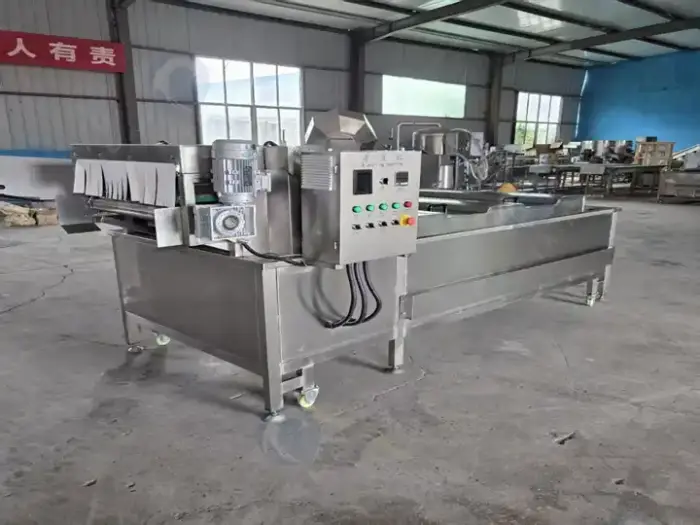
Ob Sie eine bestehende Anlage aufrüsten oder eine neue Produktionslinie bauen, das Verständnis, wie die Technologie des kontinuierlichen Blanchierens funktioniert — und welche Vorteile sie bietet —, kann Ihnen helfen, fundierte Entscheidungen zu treffen, die sich auf Ihren Gewinn auswirken.
Dieser umfassende Leitfaden behandelt alles, was Sie über kontinuierliche Gemüseblaubmaschinen wissen müssen, von ihren Kernkomponenten und Funktionsprinzipien bis hin zu den greifbaren Vorteilen für moderne Lebensmittelverarbeitungsbetriebe.
Was ist eine kontinuierliche Gemüseblanchiermaschine?
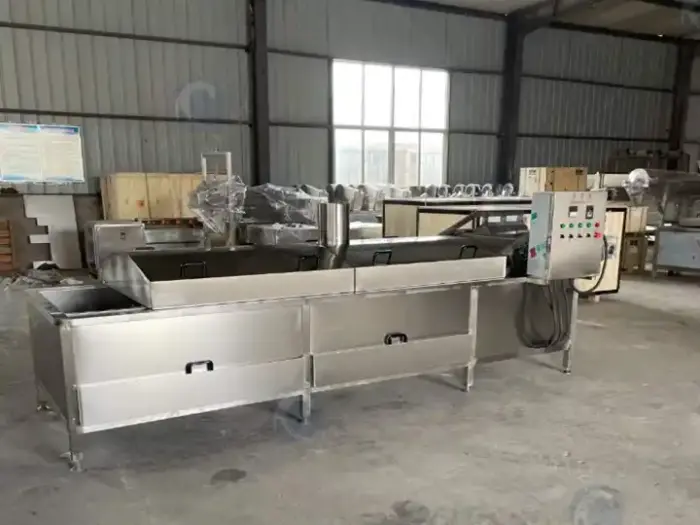
Ein kontinuierliches Gemüseblaubgerät ist eine industrielle Lebensmittelverarbeitungsanlage, die entwickelt wurde, um Gemüse in einem ununterbrochenen, automatisierten Fluss zu erhitzen. Im Gegensatz zu Chargenblanchern, die Gemüse in diskreten Ladungen verarbeiten, bewegen sich die Produkte durch Heiz- und Kühlzonen auf einem Förderband, was eine unterbrechungsfreie Produktion ermöglicht.
Wesentliche Merkmale:
- Nichtstop-Betrieb: Gemüse tritt an einem Ende ein und verlässt das andere ohne Unterbrechung
- Konsistente Verarbeitung: Jedes Stück erhält die gleiche Wärmetherapie
- Hoher Durchsatz: In der Lage, 500 kg bis 5.000 kg pro Stunde zu verarbeiten
- Automatisierte Steuerung: Temperatur-, Geschwindigkeits- und Zeitparameter werden präzise gesteuert
- Integrierter Arbeitsablauf: Nahtlos verbunden mit Waschen, Schneiden, Kühlen und Verpacken
Wie sich kontinuierliches Blanchieren vom Chargenblanchieren unterscheidet
Das Verständnis der Unterschiede zwischen kontinuierlichem und Chargenblanchieren hilft zu erklären, warum viele Verarbeiter den Wechsel vornehmen:
| Merkmal | Chargenblanchieren | Kontinuierliches Blanchieren |
|---|---|---|
| Betriebsmodus | Laden → Prozess → Entladen → Wiederholen | Kontinuierliche Zuführung und Entladung |
| Arbeitsaufwand | Hoch (Beladung/Entladung jeder Charge) | Niedrig (automatisierte Zuführung) |
| Durchsatz | Begrenzt durch Chargengröße | Skalierbar je nach Produktionsbedarf |
| Konsistenz | Unterschiedlich zwischen Chargen | Gleichmäßig bei allen Produkten |
| Energieeffizienz | Wärmeverlust während Chargenwechsel | Konsistente Wärmenutzung |
| Platzbedarf | Kompakt | Längere Grundfläche |
| Anfangsinvestition | Geringer | Höher |
| Betriebskosten | Höhere Arbeitskosten | Geringerer Arbeitsaufwand, optimierte Versorgung |
Wichtige Komponenten einer kontinuierlichen Gemüseblaubmaschine
1. Zuführungssystem
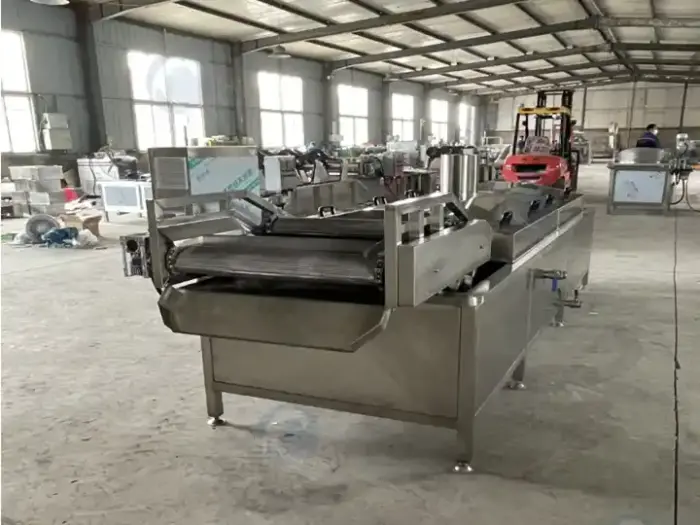
Das Zuführungssystem sorgt für einen gleichmäßigen, stetigen Fluss von Gemüse in die Blanchierzone. Komponenten umfassen typischerweise:
- Vibrationsförderer: Verteilt Gemüse gleichmäßig
- Förderband: Lebensmittelgeeignetes Edelstahlgitter oder -band mit geeigneten Perforationen
- Geschwindigkeitsregelung: Frequenzumrichter (VFD) für anpassbare Durchsatzleistung
- Niveausensoren: Aufrechterhaltung eines gleichmäßigen Produktdurchdringungsgrades
2. Heizbereich
Der Heizbereich ist der Ort, an dem Gemüse hohen Temperaturen (typischerweise 85°C bis 100°C) ausgesetzt wird, um die Blanchierungsziele zu erreichen:
Dampfblanchiersysteme:
- Direkte Dampfeinspritzung in die Verarbeitungskammer
- Schneller Wärmetransfer und Energieeffizienz
- Geringerer Wasserverbrauch
- Ideal für empfindliches Gemüse
Wasserblanchiersysteme:
- Eintauchen in heißes Wasserbad
- Gleichmäßige Wärmeverteilung
- Besser geeignet für dichtes Gemüse, das längere Wärmedurchdringung erfordert
- Integrierte Wasserzirkulation und Filtration
3. Temperaturregelsystem
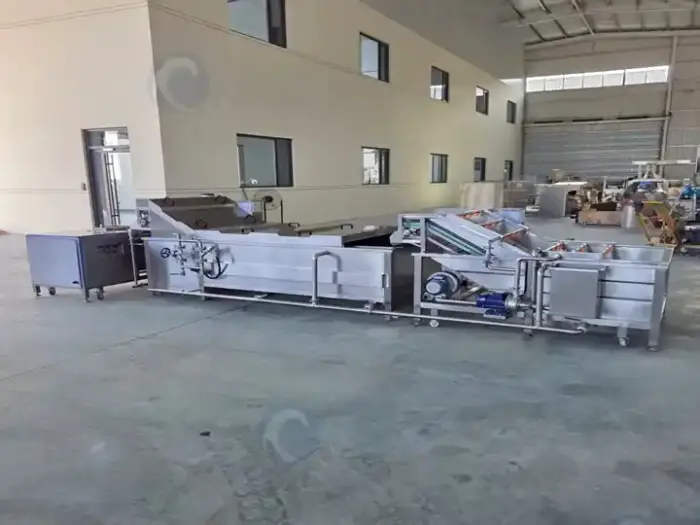
Moderne kontinuierliche Blanchierer verfügen über ausgeklügeltes Temperaturmanagement:
- PLC (Programmierbare Steuerung): Zentrale Steuereinheit, die alle Parameter verwaltet
- Temperatursensoren: Mehrere Sonden im gesamten Heizbereich
- Dampf/Wasser-Flusssteuerung: Automatische Anpassung zur Aufrechterhaltung der Sollwerte
- HMI (Mensch-Maschine-Schnittstelle): Touchscreen für Bediener zur Überwachung und Einstellung der Parameter
- Datenerfassung: Erfasst Temperaturen, Geschwindigkeiten und Produktionsvolumen für Qualitätsdokumentation
4. Kühlzone
Unmittelbares Kühlen nach dem Blanchieren ist entscheidend, um den Kochprozess zu stoppen:
- Wasserkühlbad: Kaltwasserbad (5°C bis 15°C)
- Kühlabschnitt: Umgebungs- oder gekühlte Luftstöße
- Gegenstrom-Design: Kaltes Wasser wird am Entladungsende für optimale Effizienz eingeleitet
- Temperaturübergangsüberwachung: Stellt sicher, dass Gemüse sichere Temperaturen erreicht
5. Entladesystem
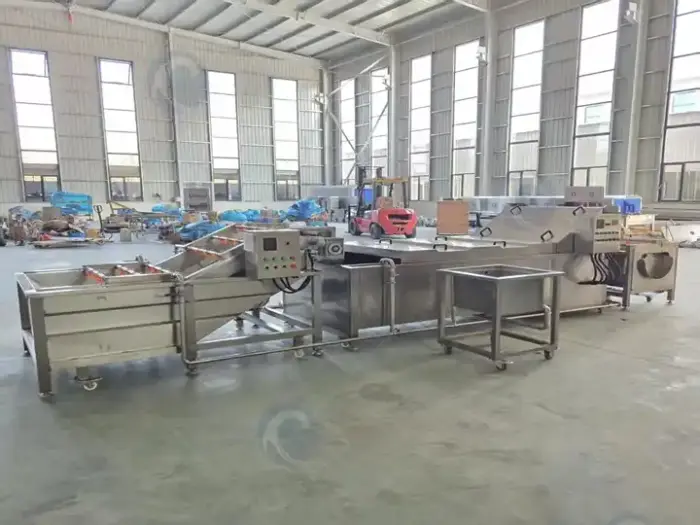
Das Entladesystem transportiert blanchiertes Gemüse zum nächsten Verarbeitungsschritt:
- Aufzugsförderer: Hebt Produkte aus dem Kühlbad an
- Entwässerungsabschnitt: Luftmesser oder vibrierende Decks entfernen überschüssiges Wasser
- Verteilerförderer: Leitet Produkte zum Einfrieren, Verpacken oder weiteren Verarbeitungsschritten
6. Unterstützungssysteme
Wasserverwaltung:
- Zuführung von Wasser nachfüllen
- Filtration und Rezirkulation
- Abwasserentsorgung
Dampfversorgung:
- Druckregulierung
- Kondensat-Rückführung
- Sicherheitsventile und -fallen
Elektrisches Schaltschrank:
- Motorkontrollen
- Sicherheitsverriegelungen
- Not-Aus-Schalter
Wie funktioniert eine kontinuierliche Gemüseblaubmaschine?
Schritt-für-Schritt-Prozessablauf:
Schritt 1: Vorbereitung und Zuführung
Gemüse, typischerweise vorgewaschen und in einheitliche Stücke geschnitten, wird in den Zuführtrichter geladen. Der Vibrationsmechanismus sorgt für eine gleichmäßige Verteilung über die Förderbreite.
Schritt 2: Eintritt in die Heizzone
Während sich das Förderband bewegt, gelangen die Gemüse in die Heizkammer. Die Geschwindigkeit ist so kalibriert, dass die erforderliche Verweilzeit basierend auf Produkttyp und -größe erreicht wird.
Schritt 3: Wärmetreatment
Gemüse wird bei präzisen Temperaturen Dampf oder heißem Wasser ausgesetzt. Dieser Prozess:
- Inaktiviert Enzyme, die Qualitätsverschlechterung verursachen
- Reduziert mikrobiologische Belastung
- Bewahrt Farbe, Textur und Nährwert
- Bereitet Gemüse für die nachfolgende Verarbeitung vor (Einfrieren, Trocknen, Konservieren)
Schritt 4: Temperaturüberwachung
Während des gesamten Heizbereichs überwachen Sensoren kontinuierlich die Temperaturen. Das PLC passt den Dampf- oder Wasserfluss an, um optimale Bedingungen zu gewährleisten.
Schritt 5: Übertragung in die Kühlzone
Unmittelbar nach dem Erhitzen gelangen die Gemüse in den Kühlabschnitt. Schnelles Abkühlen verhindert Überkochen und erhält die gewünschte Textur.
Schritt 6: Entwässerung und Entladung
Überschüssiges Wasser wird entfernt, und blanchiertes Gemüse wird zum nächsten Verarbeitungsschritt transportiert—sei es ein IQF-Gefrierschrank, eine Verpackungslinie oder ein Trocknungssystem.
Vorteile von kontinuierlichen Gemüseblaubmaschinen
1. Erhöhte Durchsatzleistung und Produktivität
Kontinuierliche Blanchierer können deutlich mehr Produkt verarbeiten als Chargensysteme:
- Kleine Systeme: 500–1.000 kg/h
- Mittlere Systeme: 1.000–3.000 kg/h
- Große industrielle Systeme: 3.000–10.000 kg/Stunde
Diese Skalierbarkeit ermöglicht es Verarbeitern, die steigende Nachfrage zu erfüllen, ohne Schichten oder Geräte hinzuzufügen.
2. Konsistente Produktqualität
Jedes Gemüse erhält die gleiche Behandlung:
- Einheitliche Enzyminaktivierung
- Konstante Farbretention
- Vorhersehbare Texturergebnisse
- Reduzierte Produktvarianz und Abfall
3. Arbeitskostenreduzierung
Automatisierung reduziert manuelle Handhabung:
- Ein Bediener kann das gesamte System verwalten
- Eliminiert repetitive Be- und Entladearbeiten
- Reduziert das Risiko von Arbeitsunfällen
- Mitarbeiter für höherwertige Qualitätskontrollaufgaben freisetzen
4. Energieeffizienz
Kontinuierliche Systeme optimieren den Energieverbrauch:
- Der Dauerbetrieb erhält die Wärme ohne wiederholte Aufheizzyklen
- Wärmerückgewinnungssysteme erfassen Energie aus heißem Abwasser
- Isolierte Kammern minimieren Wärmeverluste
- Präzise Steuerung verhindert Überverarbeitung
5. Verbesserte Lebensmittelsicherheit
Automatisierte Systeme reduzieren Kontaminationsrisiken:
- Geschlossene Verarbeitungssysteme
- Konstante Temperaturen gewährleisten die Reduktion von Pathogenen
- Reduzierter menschlicher Kontakt mit dem Produkt
- Vollständige Dokumentation für HACCP-Konformität
6. Raumoptimierung
Obwohl kontinuierliche Blanchierer eine längere Grundfläche haben, spart ihre vertikale Integration oft die gesamte Bodenfläche:
- Kompaktes Mehrzonen-Design
- Integration mit vor- und nachgelagerten Geräten
- Verminderter Bedarf an Pufferspeichern zwischen Chargen
7. Flexibilität und Vielseitigkeit
Moderne kontinuierliche Blanchierer verarbeiten vielfältige Produkte:
- Blattgemüse (Spinat, Grünkohl, Kohl)
- Wurzelgemüse (Karotten, Kartoffeln, Rüben)
- Hülsenfrüchte (Erbsen, Bohnen, Mais)
- Fruchtgemüse (Tomaten, Paprika)
- Rezeptverwaltung ermöglicht schnelle Umstellungen
Anwendungen in der Lebensmittelverarbeitung
Gefrorene Gemüseproduktion (IQF)
Blanchieren ist vor dem individuellen Schnellgefrieren unerlässlich:
- Bewahrt Farbe und Textur während der Tiefkühllagerung
- Inaktiviert Enzyme, die Off-Flavor verursachen
- Typische Kapazität: 2.000–5.000 kg/Stunde für große Betriebe
Konservengemüse
Vorverarbeitung für Konservierungsanlagen:
- Reduziert mikrobiologische Belastung
- Entfernt Luft aus Gemüsegeweben
- Verbessert das Vakuum in versiegelten Behältern
Fertiggerichte, frisch geschnitten
Pathogenkontrolle bei frischen Salaten:
- Blanchieren als Abtötungsschritt gegen E. coli, Salmonellen, Listerien
- Schnelles Abkühlen erhält die Frischequalität
- Verlängert die Haltbarkeit in modifizierter Atmosphärverpackung
Dehydrierte Gemüse
Vorbehandlung vor dem Trocknen:
- Bewahrt Farbe ohne Schwefeldioxid
- Verbessert die Rehydratationseigenschaften
- Reduziert Trocknungszeit und Energiekosten
Babynahrung und Pürees
Sicherheit und Qualität gewährleisten:
- Konstante Weichmachung für Pürierzwecke
- Enzyminaktivierung für Haltbarkeitsstabilität
- Erfüllung strenger Lebensmittelsicherheitsstandards für Säuglingsnahrung



Auswahl der richtigen kontinuierlichen Blanchagemaschine
Wichtige Auswahlkriterien:
1. Kapazitätsanforderungen
Berechnen Sie Ihren benötigten Durchsatz basierend auf:
- Tägliche Produktionsziele
- Betriebsstunden pro Tag
- Hochsaisonanforderungen
- Zukünftige Wachstumsprognosen
2. Produkttyp-Mix
Berücksichtigen Sie die Gemüsesorten, die Sie verarbeiten:
- Dichte- und Wärmeverteilungsmerkmale
- Zartheit (Blattgemüse vs. Wurzelgemüse)
- Größen- und Formvariationen
3. Heizmethode
Wählen Sie zwischen Dampf und Wasser basierend auf:
- Produktqualitätsanforderungen
- Energiekosten und Verfügbarkeit
- Wasseraufbereitungskapazitäten
- Bestehende Versorgungsinfrastruktur
4. Automatisierungsgrad
Optionen reichen von:
- Grundlegende manuelle Steuerung
- Halbautomatisch mit Rezeptverwaltung
- Vollautomatisch mit Fernüberwachung und Datenprotokollierung
5. Integrationsanforderungen
Sicherstellen der Kompatibilität mit:
- Bestehende Wasche- und Schneidegeräte
- Nachgelagerte Gefrier- oder Verpackungslinien
- Fabrik-MES/ERP-Systeme
6. Konformität und Zertifizierung
Überprüfen Sie, ob die Ausrüstung erfüllt:
- Lebensmittelsicherheitsstandards (FDA, EU-Regelungen)
- Hygiene-Designprinzipien (EHEDG, 3-A Sanitary Standards)
- Elektrische Sicherheit (CE, UL, CSA)
Wartungsbest Practices
Tägliche Wartung:
- Reinigen und Desinfizieren aller Produktkontaktflächen
- Überprüfung der Förderbänder auf Schäden oder Verschleiß
- Überprüfung der Wasserfilter und Reinigung nach Bedarf
- Temperatursensoren auf Genauigkeit prüfen
- Parameter der Dokumentenerstellung
Wöchentliche Wartung:
- Lagerung der Lager- und beweglichen Teile schmieren
- Dampftraps und Ventile inspizieren
- Überprüfung der Riemenspannung und -führung
- Reinigen der Wärmetauscherflächen
- Not-Aus-Schalter und Sicherheitsverriegelungen testen
Monatliche Wartung:
- Temperatur- und Druckmessgeräte kalibrieren
- Elektrische Anschlüsse prüfen
- Überprüfung der Verschleißteile (Dichtungen, Gummidichtungen, Lager)
- Wasserqualität und Behandlungssysteme überprüfen
- Analyse von Energiekonsumtrends
Jährliche Wartung:
- Umfassende Inspektion durch qualifizierte Techniker
- Austausch von Verschleißteilen
- Systemleistungsvalidierung
- Steuerungssoftware aktualisieren
- Überprüfung und Aktualisierung der SOPs
Häufige Herausforderungen und Lösungen
Herausforderung 1: Ungleichmäßiges Blanchieren
Ursache: Ungleichmäßige Produktverteilung oder Temperaturabweichungen
Lösung: Zuführerschwingung anpassen, Dampfdüsen/Wasserverteiler prüfen, Sensoren kalibrieren
Herausforderung 2: Produktschäden
Ursache: Übermäßige Bewegung oder falsche Fördergeschwindigkeit
Lösung: Fördergeschwindigkeit verringern, Wasserflussraten anpassen, schonendere Handhabungssysteme für empfindliche Produkte verwenden
Herausforderung 3: Energiekosten
Ursache: Wärmeverlust, ineffizienter Betrieb
Lösung: Isolierung verbessern, Wärmerückgewinnung implementieren, Betriebstemperaturen optimieren
Herausforderung 4: Wasserqualitätsprobleme
Ursache: Ablagerung von Kalk, Kontamination
Lösung: Geeignete Wasserbehandlung, Filtration erhöhen, regelmäßige Reinigung planen
Zukünftige Trends in der kontinuierlichen Blanchiertechnologie
Industrie 4.0-Integration
- IoT-Sensoren für die Echtzeitüberwachung
- Predictive Maintenance mit maschinellem Lernen
- Cloud-basiertes Rezeptmanagement
- Digitale Zwillinge zur Prozessoptimierung
Fokus auf Nachhaltigkeit
- Wasserrecycling- und Null-Liquid-Discharge-Systeme
- Wärmepumpentechnologie zur Energierückgewinnung
- Solare thermische Integration
- Reduzierter Chemikalienverbrauch durch optimierte Verarbeitung
Fortschrittliche Steuerungssysteme
- KI-gesteuerte Prozessoptimierung
- Automatisierte Qualitätskontrollintegration
- Blockchain-Traceability
- Erweiterte Datenanalyse für kontinuierliche Verbesserung
Fazit
Ein kontinuierliches Gemüseblaubgerät ist mehr als nur eine Maschine—es ist eine Investition in Qualität, Effizienz und Lebensmittelsicherheit. Durch die Automatisierung des kritischen Blanchierprozesses können Lebensmittelverarbeiter eine gleichbleibende Produktqualität erzielen, Betriebskosten senken und den wachsenden Anforderungen der heutigen Lebensmittelindustrie gerecht werden.
Ob Sie gefrorenes Gemüse, Konserven, frisch geschnittene Salate oder dehydrierte Produkte herstellen, das richtige kontinuierliche Blanchiersystem kann Ihren Betrieb transformieren. Mit fortschreitender Technologie werden diese Systeme intelligenter, effizienter und nachhaltiger — und sind somit ein wesentlicher Bestandteil moderner Lebensmittelverarbeitungsanlagen.
Bei der Auswahl einer kontinuierlichen Blanchiermaschine sollten Sie Ihre spezifischen Produktanforderungen, Kapazitätsbedarf und langfristigen Wachstumspläne berücksichtigen. Arbeiten Sie mit erfahrenen Herstellern zusammen, die Ihre Branche verstehen und umfassende Unterstützung von Installation bis Wartung bieten.
Häufig gestellte Fragen
Wie lange hält eine kontinuierliche Gemüseblaubmaschine typischerweise?
Bei ordnungsgemäßer Wartung arbeiten industrielle kontinuierliche Blanchierer typischerweise 15–20 Jahre. Schlüsselkomponenten wie Förderbänder und Dichtungen müssen möglicherweise alle 3–5 Jahre ausgetauscht werden.
Kann eine Maschine mehrere Gemüsesorten verarbeiten?
Ja, moderne kontinuierliche Blanchierer sind für Vielseitigkeit ausgelegt. Rezeptverwaltungssysteme ermöglichen es Bedienern, schnell zwischen Produkten mit vorprogrammierten Zeit-, Temperatur- und Geschwindigkeitsparametern zu wechseln.
Wie viel Platz benötigt ein kontinuierliches Blanchiersystem?
Platzbedarf variiert je nach Kapazität. Kleine Systeme benötigen möglicherweise 8–10 Meter Länge, während große industrielle Einheiten 20 Meter erreichen können. Die Breite liegt typischerweise zwischen 1,2 und 2,5 Metern.
Welche Versorgungsstoffe werden benötigt?
Standardanforderungen umfassen: Dampflieferung (für Dampfbeschichter), Warmwassererzeugung (für Wasserblanchierer), Kaltwasser für Kühlung, elektrische Energie (typischerweise 30–100 kW je nach Größe) und Druckluft für Steuerungen.
Wie kann ich überprüfen, ob das Blanchieren ausreichend ist?
Die Standardmethode ist der Peroxidase-Enzymtest. Vollständige Inaktivierung der Peroxidase zeigt an, dass das Blanchieren ordnungsgemäß erfolgt ist. Viele Verarbeiter überwachen auch Farbe, Textur und mikrobiologische Tests.